

Table of Contents
The Neuro-Architecture of Focus: 8 Quiet Solutions for Stunning Home Office Acoustic Design
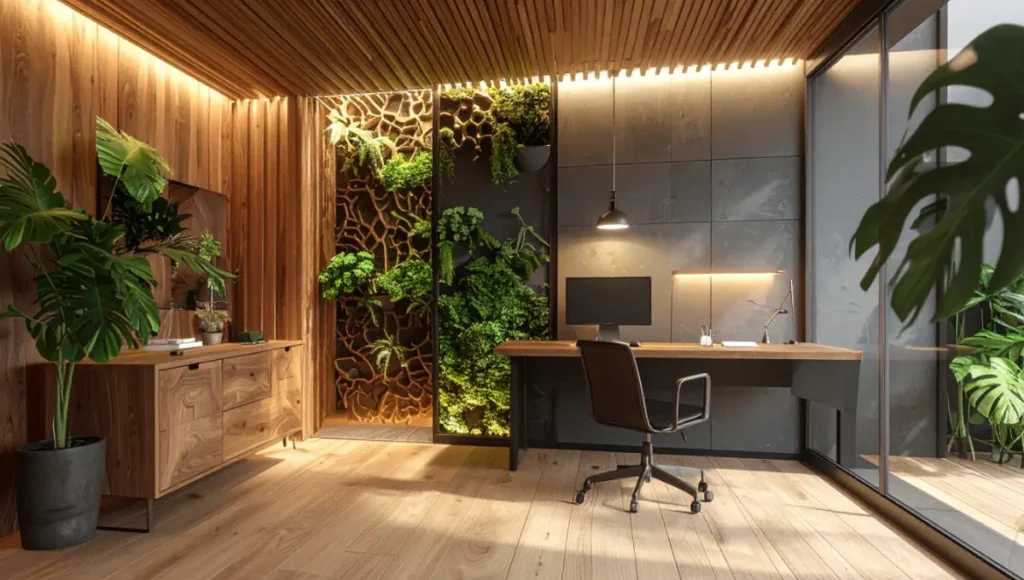
The global migration to the domestic sphere has exposed a fundamental flaw in modern residential architecture: we have been building shells for storage, not sanctuaries for cognitive performance. In the high-density urban corridors of Singapore, where the boundary between the frantic external pace and internal stillness is often a single pane of glass, the concept of a “quiet room” is no longer a luxury—it is a physiological necessity. To achieve true home office acoustic design, we must look past the superficiality of soft furnishings and interrogate the very physics of how sound waves interact with our nervous systems.
Nuvira Perspective
At Nuvira Space, we view the dwelling not as a static backdrop for life, but as an active “health machine”—a sophisticated extension of the human biological system. We believe the next era of domesticity is defined by human-machine synthesis, where modular adaptability and circadian synchronization are the primary design drivers. By treating acoustics as a quantifiable metric of spatial psychology rather than an after-thought of “decor,” we empower the inhabitant to reach states of deep work through a curated, responsive environment that respects the delicate feedback loop between the ear, the brain, and the built environment. Our approach integrates seamlessly with the broader smart home ecosystems of 2026, moving beyond simple automation into true environmental intelligence.
Technical Deep Dive: The Physics of Sound and Cognition
When you experience “noise,” your brain isn’t just hearing sound; it is processing a threat. From an evolutionary standpoint, sudden spikes in decibels trigger the amygdala, releasing cortisol and fragmenting the focus required for high-level synthesis. This biological reality aligns with the American Institute of Architects (AIA) “Design for Excellence” framework, specifically the “Design for Wellness” measure, which identifies acoustic comfort as a cornerstone of mental health in residential typologies. Effective home office acoustic design requires a multi-layered strategy that addresses both airborne and structure-borne vibrations.
1. Mass-Loaded Barriers (Isolation)
The first layer is decoupling. Traditional drywall acts as a drum skin, vibrating in sympathy with your neighbor’s vacuum or street traffic.
- Technical Spec: Implement a constrained-layer damping compound (like Green Glue) between two layers of 5/8″ Type X gypsum.
- AIA Case Study Inference: Analyzing AIA-recognized residential projects reveals that superior acoustic isolation is often achieved by increasing partition mass. For the modern home office, adding a layer of Mass Loaded Vinyl (MLV) creates a non-resonant barrier that “limps” sound waves, preventing them from penetrating the work envelope.
- Result: This converts sound energy into minute amounts of heat, effectively “killing” the vibration before it enters your cognitive zone.
2. High-NRC Porous Absorption (Clarity)
In a home office, “echo” is the enemy of digital communication. If your room has an NRC (Noise Reduction Coefficient) of less than 0.75, your voice during video calls will sound hollow and fatiguing.
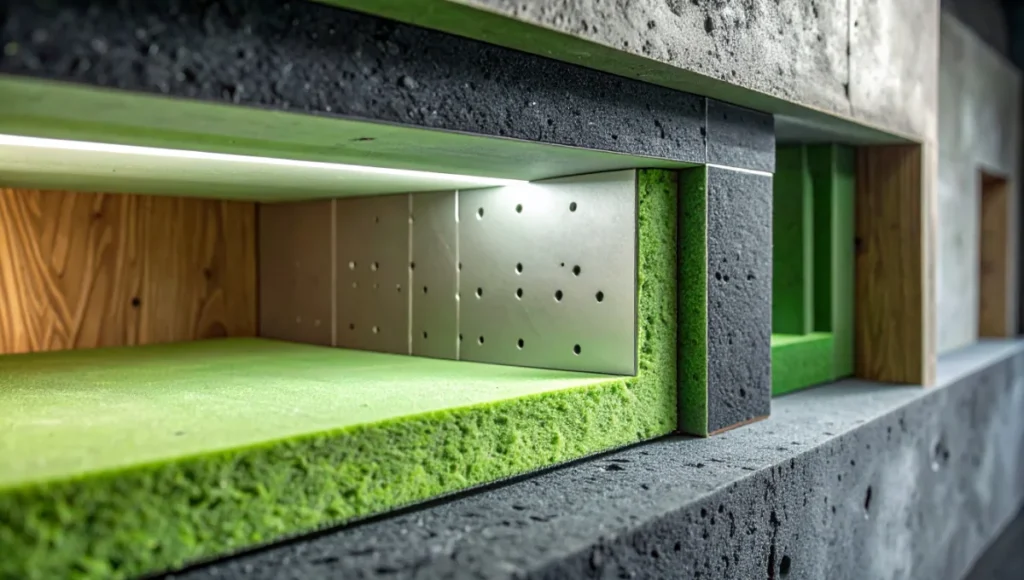
- Technical Spec: Utilize 40mm semi-rigid stone wool panels wrapped in acoustically transparent textiles (tested to ASTM C423).
- Strategic Integration: To ensure these panels don’t disrupt the visual flow, many designers are looking toward biophilic interior design principles, using natural fibers and moss-integrated absorbers that serve dual roles in air filtration and sound attenuation.
- Result: These panels “trap” mid-to-high frequency reflections, creating a “dead” but natural-sounding environment.
3. Diffusive Geometric Scattering
A common mistake is over-absorbing, which creates an “anechoic” feeling that is unsettling to the human psyche. You need “sparkle” without “reverberation.”
- Technical Spec: Install 1D or 2D Quadratic Residue Diffusers (QRD) on the rear wall behind your seating position.
- Digital Visualization: When planning these complex surfaces, utilizing Unreal Engine 5 for architecture allows for real-time ray-tracing of sound paths, ensuring your diffusion patterns are optimized for your specific desk location.
- Result: Sound waves are scattered in time and space, maintaining room “liveness” while eliminating standing waves and flutter echoes.
4. Flanking Path Mitigation
Sound behaves like a fluid; it will find the smallest orifice to bypass your heavy walls. This is known as flanking.
- Technical Spec: Use putty pads for electrical outlet boxes and acoustic sealant for every joint between the wall, floor, and ceiling.
- Architectural Logic: Even in flexible home design, where walls may be modular or temporary, acoustic integrity must be maintained through high-quality gasket systems.
5. Structure-Borne Impact Isolation
Impact noise—the sound of footsteps or mechanical hums—travels through the building’s skeleton.
- Technical Spec: Use joist tape or isolation clips (RSIC-1) to decouple the ceiling or floor from the structural frame.
- AIA Standards: The AIA often highlights the importance of “Design for Economy” through longevity; by isolating impact noise early, you prevent the need for expensive secondary retrofits as the urban density increases.
6. The “Soundmasking” Layer
Sometimes, total silence isn’t the goal. A low-level, steady background sound can raise the “noise floor,” making distracting intermittent sounds (like a barking dog) less noticeable.
- Technical Spec: A dedicated 1/3 octave band soundmasking system tuned to the human speech spectrum.
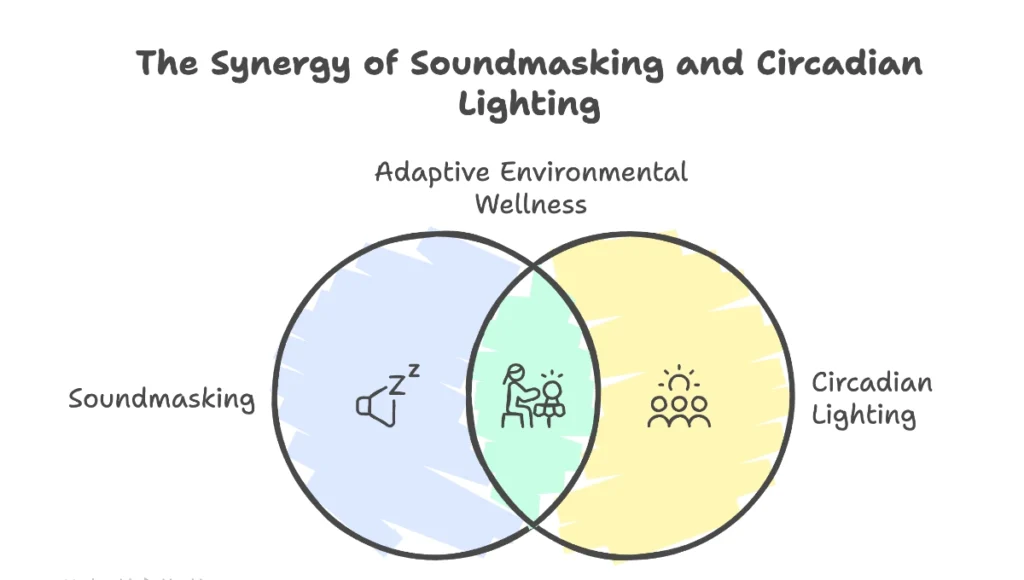
- Synthesis: This fits into the broader concept of circadian lighting systems, where the soundscape and light spectrum shift in unison throughout the day to support different cognitive modes.
7. Glazing Performance
Windows are typically the weakest link in the acoustic envelope.
- Technical Spec: Replace standard double-pane glass with laminated “Acoustic Glass” consisting of two panes of different thicknesses (e.g., 6mm and 4mm) separated by a PVB interlayer.
- Environmental Link: While you are sealing the window for sound, consider how this affects your urban rewilding examples, as the view of nature remains a primary driver for focus even if the sound is blocked.
8. Adaptive Furniture Layouts
The physical position of your desk relative to corners and walls changes the frequency response of the room.
- Technical Spec: Positioning the work surface at 38% of the room’s total depth is the “golden ratio” for minimizing modal interference (bass buildup).
- Design Context: This precision is increasingly easy to achieve in micro-living layouts, where every centimeter of spatial placement is calculated for maximum utility.
Comparative Analysis: Nuvira Standards vs. Industry Status Quo
| Feature | Industry Standard “Decor” | Nuvira Neuro-Acoustic Strategy |
|---|---|---|
| Materiality | Aesthetic-first (Foam, Curtains) | Performance-first (Stone wool, PET, MLV) |
| Philosophy | Hiding the noise | Engineering the silence |
| Approach | Reactive (add a rug) | Proactive (decouple the envelope) |
| Biophilic Link | Visual only (plants) | Sensory-Integrated (Acoustic-Biophilic synthesis) |
| Adaptability | Fixed and heavy | Modular vs. Prefab solutions |
Concept Project Spotlight: Speculative / Internal Concept Study “The Echo-Refuge” by Nuvira Space
Project Overview: Rotterdam / High-Density Residential / Vision
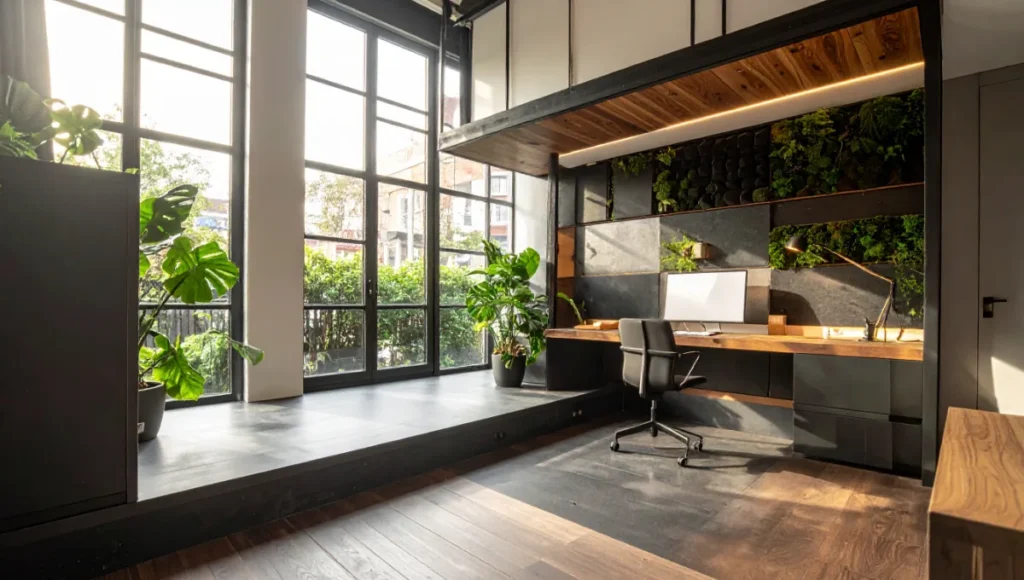
Located in the post-industrial docklands of Rotterdam, the “Echo-Refuge” study addresses the challenge of creating a high-performance workspace within a 45sqm open-plan micro-apartment. The vision was to create a “room-within-a-room” that could transition from a high-focus “monastic” mode to a restorative “ambient” mode.
Design Levers Applied
- Floating Floor Topography: A 50mm raised floor system using U-boat scenting dampeners to isolate the desk from structural vibrations caused by nearby heavy rail.
- The “Lungs” Partition: A modular, CNC-milled timber screen backed with recycled PET acoustic felt. This leverages generative AI in architecture to create fractal patterns that mimic the sound-scattering properties of a forest canopy.
- Spectral Masking: An integrated 7.1 spatial audio system that uses “pink noise” algorithms to mask the unpredictable frequencies of the city outside.
- Bio-Acoustic Synthesis: We explored the use of algae bio-curtains as a secondary acoustic layer, using the viscous nature of the fluid to dampen vibration while purifying the air.
Transferable Takeaway
You can apply the same logic at home by tuning evening lighting to a warmer 2200K, building a refuge corner with heavy-weave wool drapes to absorb high frequencies, and simplifying one primary sightline toward a natural anchor—like a single, large-leafed plant—to lower your visual “noise” floor.
Intellectual Honesty: Current Limitations
While we can significantly mitigate domestic noise, we must acknowledge the “Flanking Path” problem. Sound is like water; it finds the weakest point. In many modern residential builds, electrical outlets are placed back-to-back in shared walls, creating an “acoustic leak” that no amount of surface-level paneling can fix. Furthermore, the high cost of high-density materials like carbon-negative concrete with acoustic properties remains a barrier to universal adoption. True silence currently requires structural intervention that many renters cannot legally undertake.
2030 Future Projection: The Biometric Home
By 2030, we predict the home office will evolve into a “Biometric Shell.” Imagine a workspace that senses your heart rate variability (HRV). If your stress levels rise, the walls—embedded with non-Newtonian acoustic fluids—will change density to increase sound isolation. Transparency levels in smart-glass partitions will adjust to optimize visual privacy, and your “soundscape” will be a personalized AI-driven mask that adapts in real-time to your cognitive load. We may even see entire 3D printed neighborhoods where acoustic pathways are “printed” directly into the structural lattice.
Actionable Design Principles for the Home Architect
- Prioritize the “First Reflection” Points: Sit at your desk and have someone move a mirror along the side walls. Wherever you see the reflection of your speakers or your own face, that is where your acoustic treatment must go.
- Manage the Bass: Low-frequency energy (the “thump” from music or HVAC) gathers in corners. Use “Bass Traps”—thick, triangular absorbers—to prevent room boominess.
- Seal the Gaps: A 1% gap in a door’s seal can let in 50% of the sound. Use heavy-duty drop seals and weatherstripping on your office door to maintain the “Acoustic Envelope.”
- Consider the 15-Minute City Metric: As we move toward 15-minute city feasibility, our homes become our primary social and professional hubs, making the soundscape of the street as important as the soundscape of the room.
Comprehensive Technical FAQ
Q: Will heavy curtains work for home office acoustic design?
A: Curtains are effective at absorbing very high frequencies (the “hiss” of air) and reducing visual distraction. However, they lack the mass to block external noise or the density to manage low-mid frequencies.
- Spec: For real impact, use curtains with a minimum weight of 1500g/m².
Q: What is the difference between Soundproofing and Acoustic Treatment?
A: This is the most common point of confusion.
- Soundproofing: Blocking sound from entering or leaving a room (requires Mass and Decoupling).
- Acoustic Treatment: Controlling the quality of sound inside the room (requires Absorption and Diffusion).
Q: Can I use “egg-carton” foam?
A: No. Thin foam is a fire hazard and only absorbs a tiny sliver of the high-frequency spectrum, leaving your room sounding “muddy” and imbalanced. Professional home office acoustic design requires materials with a proven absorption coefficient across the 125Hz–4000Hz range.
Q: How do environmental factors like winter storms affect my acoustics?
A: Extreme weather, such as Yosemite’s 2026 winter storms, can introduce high-velocity wind noise. Proper acoustic sealing (Step 3 in Actionable Principles) also acts as thermal insulation, protecting your cognitive comfort from both noise and temperature flux.
Join the Evolution of Space
The era of the “quiet corner” is over; the era of the Neuro-Architectural Refuge has begun. If you are ready to move beyond decor and begin engineering your environment for peak biological performance, explore our modular acoustic systems. At Nuvira Space, we don’t just design offices; we calibrate your potential.
1 thought on “8 Quiet Solutions for Stunning Home Office Acoustic Design”