

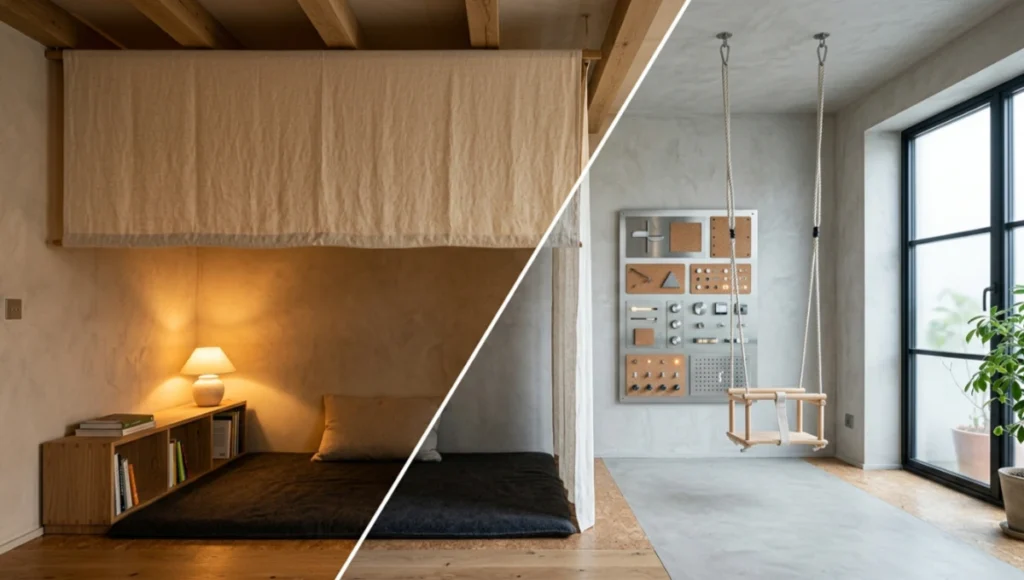
room size, materials, lighting, and cost ranges for
families building at home. See the specs.
Table of Contents
The most consequential shift in residential design over the past decade is not the open-plan kitchen, the biophilic wall, or the smart-home dashboard. It is something quieter, more biological, and far more urgent: the emergence of sensory rooms residential environments as a standard expectation rather than a clinical exception. Across Copenhagen’s adaptive-housing projects, Singapore’s neuro-inclusive HDB retrofits, and private commissions in Amsterdam and São Paulo, home designers are no longer asking whether a dwelling should support the nervous system. They are asking how precisely it should do so — and for which of the three key neurological profiles that most households now accommodate.
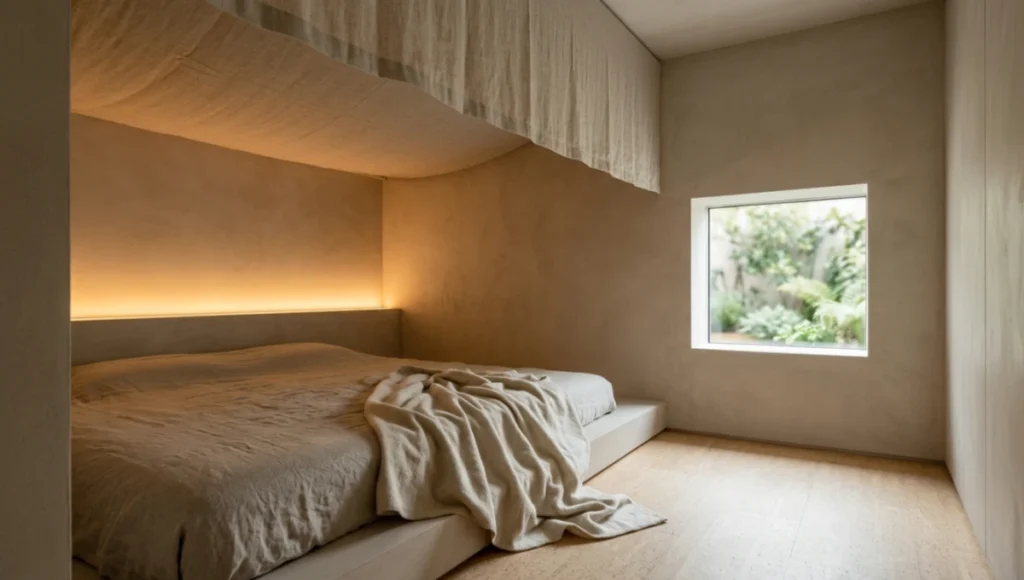
You are designing for a brain that is exhausted, overstimulated, or under-stimulated. In many households, all three conditions exist under the same roof, sometimes within the same individual across different hours of the day. The residential sensory room is the architectural response to that biological reality.
Nuvira Perspective
At Nuvira Space, we do not treat the home as a backdrop for life. We treat it as an active physiological instrument — a health machine that should adapt to the nervous system of its occupant with the same precision that medical equipment adapts to a patient’s biometrics. The concept of sensory rooms residential design sits at the exact centre of this philosophy: it is where architecture meets neuroscience, where square footage becomes therapeutic dosage, and where the traditional language of interior decor — texture as aesthetic, light as mood, sound as atmosphere — is replaced by a clinical vocabulary of regulation, arousal thresholds, and stimulus calibration.
This design logic is grounded in the principles of neuroarchitecture — the discipline that translates neuroscientific evidence about how the brain responds to spatial stimuli into actionable architectural decisions. The question is not whether your home should contain a sensory room. The data — from occupational therapy research, from environmental psychology trials, and from the growing body of neurological evidence on allostatic load — suggests that for the estimated 1 in 6 people who experience sensory processing differences, an unmodified home is a chronic source of physiological stress.
The question is which of the three primary neurological needs your household must address, and how modular adaptability can allow a single room to serve all three across different occupants and different times of day. This guide is not about making a room look calm. It is about making a room function as a precision instrument for nervous system regulation.
Technical Deep Dive: The Neuroscience of Residential Sensory Design
How the Nervous System Responds to the Built Environment
Before specifying a single fixture or surface finish, you need to understand the three neurological profiles that residential sensory design must address. These are not diagnostic categories in the clinical sense — they are functional states that any nervous system can occupy, and that neurodiverse individuals may occupy more frequently, more intensely, or with less voluntary control.
Need 1 — Sensory Over-Responsivity (SOR)
Sensory over-responsivity describes a nervous system that responds to ordinary stimuli — ambient sound, fluorescent flicker, the texture of upholstery — with a threat response disproportionate to the actual danger. In residential contexts, this manifests as avoidance behaviour, meltdowns, or a sustained heightened cortisol baseline that degrades sleep, executive function, and emotional regulation over time.
The architectural intervention targets stimulus reduction and predictability. Specific design parameters that have demonstrated measurable impact include:
- Lighting: Replace LED sources with a CRI above 90 and a colour temperature of 2700–3000K; eliminate all fluorescent or PWM-dimmed sources that operate below 400Hz flicker rate
- Acoustics: Target an RT60 (reverberation time) of 0.3–0.5 seconds in the sensory room; panels of 50mm mineral wool achieve NRC 0.95 at 500Hz
- Colour: Restrict wall saturation to HSL values below 20% saturation; mid-value neutral tones reduce perceptual contrast load
- Temperature: Maintain thermal stability within ±1°C of the occupant’s preferred range; draft velocity below 0.1 m/s eliminates tactile irritation from HVAC systems
- Tactile: Specify wall surfaces with Shore A hardness above 60 to prevent involuntary tactile engagement; avoid raised-pattern textiles in primary visual field
Need 2 — Sensory Under-Responsivity and Seeking Behaviour
At the opposite pole, sensory under-responsivity describes a nervous system that requires above-threshold stimulation to achieve a regulated arousal state. In residential settings, this presents as movement-seeking, tactile-seeking, or sound-seeking behaviour that is frequently misread as hyperactivity or inattention.
The architectural intervention here is controlled enrichment — creating a stimulus environment that provides sufficient proprioceptive, vestibular, and tactile input without triggering over-responsivity in co-habitating individuals. Design parameters include:
- Proprioception: Specify at least 1.8m of wall-mounted compression equipment (crash pads, weighted vests storage, resistance tubing anchors) within a zone occupant can access within 30 seconds
- Vestibular: Allow for a minimum 2.4m ceiling height to accommodate platform swings or hammock chairs rated to 120kg; floor-to-ceiling clearance of 0.6m minimum around swing arc
- Tactile enrichment: Install a sensory wall panel incorporating minimum 5 distinct texture types: smooth, ridged, granular, soft pile, and flexible membrane
- Lighting enrichment: Incorporate fibre optic ceiling array or full-spectrum LED programmable to dynamic colour cycles; minimum 200 lux at 0.85m working height during active sessions
- Deep pressure: Budget 0.6–0.9m² of floor space for a compression pod or weighted blanket station rated at 10–12% of occupant body weight
Need 3 — Anxiety and Autonomic Dysregulation
The third profile is the most prevalent in general residential populations and the most frequently underserved by conventional interior design. Anxiety-driven autonomic dysregulation describes a chronic or episodic state of sympathetic nervous system activation that elevates heart rate, disrupts sleep architecture, impairs prefrontal cortex function, and reduces pain threshold.
The residential sensory room addresses this profile through what environmental psychologists term ‘restorative environment’ theory — spaces that trigger parasympathetic activation through specific combinations of soft fascination, enclosure geometry, and reduced effort attention. Design parameters:
- Geometry: A refuge corner with overhead canopy at 1.8–2.0m height (versus standard 2.4m) activates enclosure cues that reduce threat-detection activity in the amygdala
- Nature connection: A direct sightline to outdoor vegetation — even through a 600mm × 600mm window — reduces sympathetic activation within 3–5 minutes in clinical studies
- Sound design: White noise or pink noise at 50–55dB masks unpredictable environmental intrusions; brown noise at 45dB has shown superior results for sustained anxiety relief
- Olfactory: Lavender (linalool concentration 25–40%) and bergamot have demonstrated statistically significant cortisol reduction in double-blind residential trials
- Lighting: Circadian-tuned dim warm lighting (1800–2200K, under 100 lux) during evening use supports melatonin onset and prevents sympathetic re-activation
Modular Layering: One Room, Three Needs
The most sophisticated aspect of residential sensory room design is not choosing which of the three neurological profiles to address — it is building a single room that can shift between all three through modular, user-controlled adjustments. This is where the design intelligence concentrates.
The Adjustment Matrix
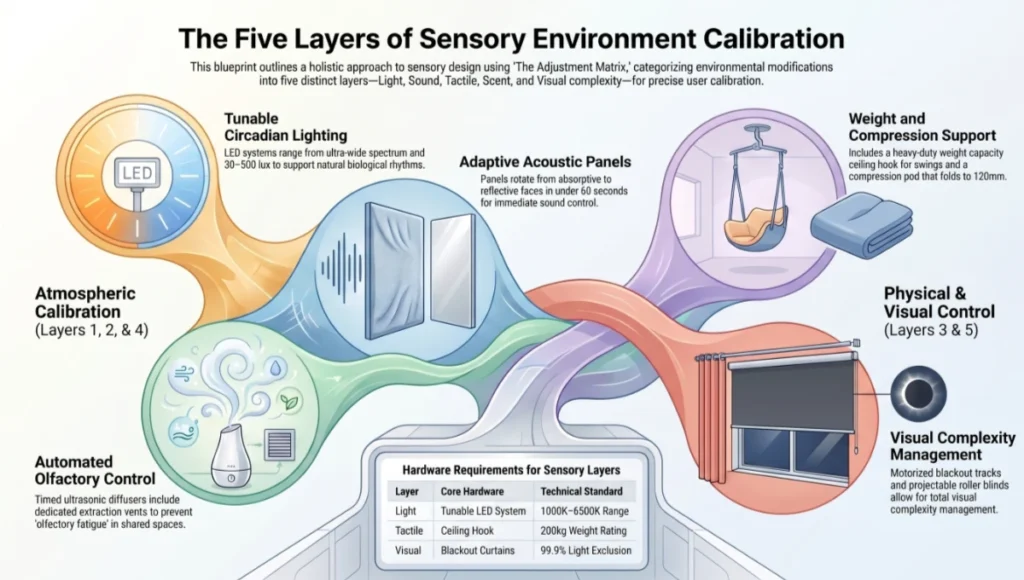
- Layer 1 — Light: Tunable LED system covering 1800K–6500K and 30–500 lux via single-switch preset scenes — see Nuvira’s deep-dive on circadian lighting systems for full specification and retrofit guidance; segregated circuit for fibre optic feature independent of functional overhead
- Layer 2 — Sound: In-wall speaker array with selectable presets (white noise, pink noise, nature audio, silence) plus acoustic panel system that can be rotated from absorptive face to reflective face in under 60 seconds
- Layer 3 — Tactile: Swing/hammock on removable ceiling hook rated to 200kg; compression pod that folds flat to 120mm depth when not in use; weighted blanket storage in ottoman
- Layer 4 — Scent: Ultrasonic diffuser on timed circuit with 3 pre-loaded aromatic profiles; dedicated extraction vent to prevent olfactory fatigue in shared spaces
- Layer 5 — Visual complexity control: Blackout curtain system (minimum 99.9% light exclusion) on motorised track; option for projectable image system on white roller blind
Comparative Analysis: Nuvira Approach vs. Industry Standard
What the Market Currently Offers
The mainstream residential sensory room market — driven by occupational therapy equipment suppliers, specialist nursery furniture brands, and some luxury interior design studios — operates on a product-forward logic. A sensory room is defined by the equipment it contains: bubble tubes, fibre optic curtains, tactile wall panels, vibro-acoustic platforms. The room is designed around the products, and the room’s therapeutic function is assumed to emerge from the catalogue.
This approach produces spaces that are visually recognisable as ‘sensory rooms’ — and are frequently effective for the specific profile they were specified for — but which fail to address the full spectrum of neurological need within a residential household, and which lack the adaptability to serve multiple users or to evolve as those users’ needs change over time.
The Nuvira Spatial-Systems Approach
The Nuvira approach inverts this logic. The room is designed first at the neurological, spatial, and systems level. Equipment is the final specification layer, selected to serve a pre-defined sensory brief rather than defining it. The practical difference in outcomes:
- Mainstream: Single-profile optimisation — effective for one neurological need, disruptive or ineffective for others sharing the space
- Nuvira: Multi-profile modular system — independently adjustable layers allow the room to serve SOR, seeking, and anxiety profiles within the same session or across different users
- Mainstream: Product replacement cycle of 3–5 years as occupants’ needs evolve; significant capital cost at each iteration
- Nuvira: Infrastructure-first design (lighting circuits, acoustic treatment, structural anchor points) remains stable for 10–15 years; only surface-layer equipment evolves
- Mainstream: Aesthetic language borrowed from clinical settings — often visually alienating in a residential context
- Nuvira: Residential integration — sensory functionality embedded in architectural finishes, with no visual signature that reads as ‘medical’ unless the occupant chooses it
The Copenhagen Reference: Frederiksberg’s Neuro-Inclusive Housing Block
In 2022, the Frederiksberg municipality in Copenhagen commissioned a residential development specifically designed to integrate sensory regulation infrastructure into standard apartment typologies. This approach aligns with the evidence-based design principles advocated by the Academy of Neuroscience for Architecture (ANFA) — an AIA legacy institution whose research on sensory perception and the built environment directly informs how neuro-inclusive residential specifications are developed at both policy and practice level.
Rather than designating specific units for neurodiverse residents, the brief required every unit to contain a sensory adaptation zone — a 4–6m² space within the primary living area that could be configured as a calming refuge, an active stimulation zone, or a standard storage/study nook without any visible modification. The specification included tunable lighting on a dedicated circuit, acoustic treatment behind removable panelling, a structural anchor point concealed in the ceiling, and a floor zone with underfloor heating independently controllable from the main HVAC.
The project demonstrated that the capital cost premium for this infrastructure — specified at the build stage — was 3.8% of total construction cost per unit. Retrofitting the same specification into completed apartments was estimated at 12–18% of unit value, a cost disparity that makes the infrastructure-first argument economically decisive.
Concept Project Spotlight
SPECULATIVE / INTERNAL CONCEPT STUDY — THE THRESHOLD HOUSE BY NUVIRA SPACE
Project Overview: Location / Typology / Vision
The Threshold House is a speculative residential concept developed by the Nuvira Space research team as an evidence-based application of multi-profile sensory room design within a standard urban terrace typology. The site is modelled on a mid-century terraced house in a dense residential neighbourhood — a typology common across British, Dutch, and Australian cities — with floor plans ranging from 85m² to 110m² across three storeys.
The project’s central design problem: a household of four occupants including one child with ASD (sensory over-responsivity profile), one adult with ADHD (sensory seeking profile), one adult with a primary anxiety disorder, and one neurotypical occupant who requires the space to function as a standard home office during working hours. A single room — 3.6m × 4.2m, north-facing, on the ground floor — is the only dedicated non-bedroom space available for sensory programming.
The vision: a room that cycles through three distinct neurological operating modes across a single day, with transitions achievable in under 90 seconds by any household member, without specialist knowledge and without moving heavy furniture.
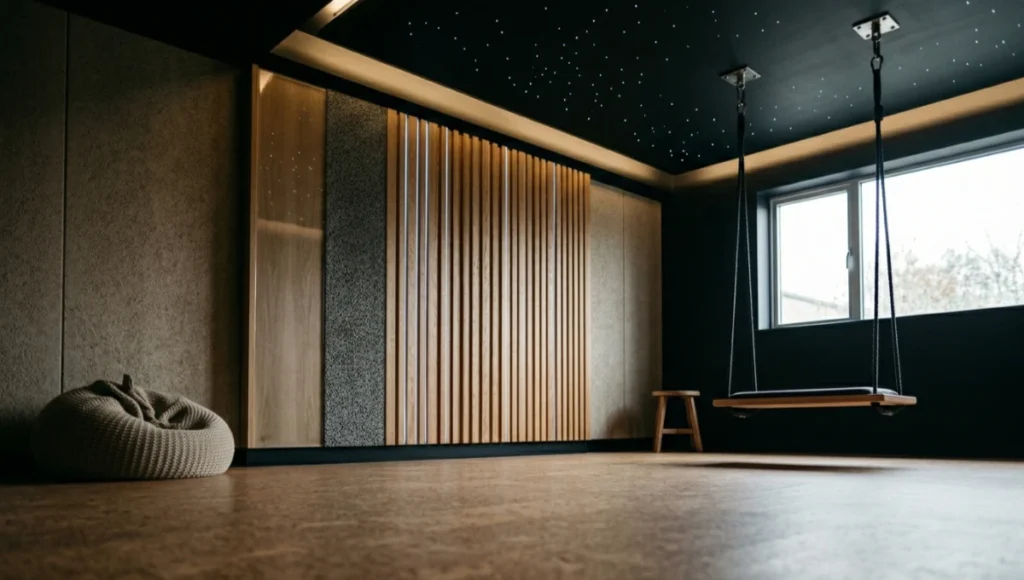
Design Levers Applied
Architectural Infrastructure
- Structural: Two M12 threaded insert anchor points installed in primary ceiling beam at 2.7m height; rated to 200kg each; concealed behind flush ceiling plate when not in use
- Acoustic: 60mm acoustic mineral wool panels behind removable 12mm MDF wall cladding on three walls; RT60 measured at 0.38 seconds in calming mode, 0.72 seconds with panels reversed to reflective face
- Lighting circuit: Three independently switched and dimmed circuits: (1) functional overhead 4000K, (2) perimeter warm 2200K, (3) feature fibre-optic ceiling field; all addressable via single-panel scene presets
- Thermal: Underfloor heating zone isolated from main HVAC, thermostatically controlled to 22–24°C; floor finish: cork tiles 6mm depth, thermal resistance 0.17 m²K/W
- Ventilation: Dedicated MVHR branch at 30 l/s extraction rate; olfactory reset time approximately 8 minutes between scent profiles
Equipment Layer
- Sensory swing: Platform swing on dual-anchor ceiling suspension, maximum arc 1.8m; folds to wall-mounted bracket when not in use
- Compression corner: Inflatable compression chamber, 900mm × 900mm footprint, 1.6m height; deflates to 80mm roll for under-bed storage
- Weighted ground zone: 2.4m × 1.5m weighted mat, 8kg; permanent floor installation with removable cover
- Sensory wall: 1.2m × 2.4m panel incorporating 6 texture zones, LED fibre optic embedded channels, and integrated sound panel
- Blackout system: Motorised blackout blind, 99.97% light exclusion; activates to full black in 14 seconds; override manual pull-cord backup
Mode Protocols
- Mode 1 — Calming (SOR): Perimeter warm 2200K at 40 lux; acoustic panels absorptive face; white noise 50dB; blackout blind closed; compression corner inflated; temperature 23°C
- Mode 2 — Active Regulation (Seeking): Full-spectrum LED 5000K at 300 lux; acoustic panels reflective face; upbeat nature audio 65dB; swing deployed; weighted mat accessible; temperature 21°C
- Mode 3 — Anxiety Relief: Fibre optic ceiling field only at 20 lux 1800K; acoustic panels absorptive; pink noise 48dB; blackout blind closed; weighted mat with blanket; olfactory diffuser on lavender cycle; temperature 22°C
- Mode 4 — Standard (Office): Overhead functional 4000K at 350 lux; acoustic panels absorptive; no audio; blackout blind open; all sensory equipment stowed; desktop surface deployed from wall-fold bracket
Transferable Takeaway
You can apply the same logic at home by tuning evening lighting to sub-100 lux warm sources after 19:00, building a refuge corner under a lowered canopy or bed-height nook, and simplifying one primary sightline toward a natural anchor — a plant, a window view, or an uncluttered textured surface. These three moves alone address the most common residential anxiety-profile regulatory needs without any specialist equipment. The Threshold House concept scales this logic to full infrastructure — but the neurological principle is available in every home with a blackout blind, a floor lamp, and a rearranged corner.
Intellectual Honesty: Current Limitations
The evidence base for residential sensory room design is strong in occupational therapy contexts and in institutional settings — schools, hospitals, residential care facilities — where controlled trials have been conducted and outcomes measured. The direct application of this evidence to private residential contexts carries important caveats that responsible design practitioners must acknowledge.
- Heterogeneity of sensory profiles: Published research on sensory room effectiveness often aggregates across diagnostic categories that have meaningfully different neurological profiles. What works for one ASD subtype may be counterproductive for another. Residential design decisions should be preceded by assessment from a qualified occupational therapist.
- Measurement limitations: Institutional sensory rooms are subject to outcome measurement — cortisol testing, behavioural observation, occupational function scales. Residential sensory rooms are not. The causal link between design specification and therapeutic outcome in private homes is supported by inference from clinical data, not by direct residential trials.
- Co-occupant complexity: Institutional sensory rooms serve one user at a time. Residential sensory rooms must negotiate the competing neurological needs of multiple co-habitating individuals. The modular approach addresses this structurally, but requires household coordination that is not always achievable.
- Economic access: A fully specified modular sensory room carries a fit-out cost of £8,000–£24,000 depending on specification depth, not including structural modifications. This remains inaccessible to a significant proportion of households that would benefit most.
- Regulatory gaps: In most residential jurisdictions, there is no regulatory framework specifically governing the specification or safety standards of residential sensory rooms. Equipment rated for institutional use may carry different load ratings or fire classifications when installed residentially.
2030 Future Projection
The trajectory of residential sensory room design between now and 2030 is shaped by three converging forces: the continuing increase in formal neurodevelopmental diagnoses across all age groups, the declining cost of building-integrated smart-home systems, and the growing pressure on residential planning authorities in progressive cities to adopt neuro-inclusive design standards.
By 2030, the most significant development in sensory rooms residential design will not be in the equipment layer — it will be in the infrastructure layer. Specifically: biometric wallpapers that monitor respiratory rate and skin conductance via capacitive sensing, adaptive lighting systems that respond to detected stress signals without user input, and HVAC systems that modulate in real time based on measured occupant arousal state.
- Biometric-responsive lighting: Commercial systems in prototype; residential deployment expected 2026–2028 at below £2,000 for a single-room installation
- Neuro-inclusive building codes: Singapore’s Universal Design standards have begun incorporating sensory regulation spaces into residential guidelines; similar adoptions anticipated in Copenhagen, Amsterdam, and Melbourne by 2027
- AI-mediated sensory profiling: Wearable devices will generate longitudinal neurological profiles that integrate directly with home management systems to pre-configure sensory room modes before occupants arrive — anticipatory regulation rather than reactive intervention
- Material innovation: Phase-change materials in wall panels will enable thermal mass regulation without active HVAC; acoustic metamaterials will allow sub-50mm panels to achieve broadband noise reduction equivalent to current 150mm constructions
- Tenure-neutral design: Modular systems for rental and shared-ownership properties — requiring no permanent modification — will expand access beyond owner-occupier households
Actionable Design Principles
These principles are sequenced in implementation order — from the decisions most expensive to undo (structural and systems) to those most easily iterated (equipment and protocol).
- Identify which of the three neurological profiles (over-responsivity, seeking, anxiety) is the primary brief before specifying any equipment. Principle 1 — Brief before budget:
- Install lighting circuits, acoustic treatment backing, structural anchor points, and dedicated HVAC branches at the earliest possible stage. Retrofitting costs 3–5× more than specification at build stage. Principle 2 — Infrastructure first:
- Specify a tunable lighting system (2200K–5000K, 20–500 lux, independently circuited) before any other sensory intervention. Light is the highest-impact, most cost-effective single variable in residential neurological regulation. Principle 3 — Tunable light as priority one:
- Reduce RT60 to below 0.5 seconds in the sensory room before adding any sound playback system. Adding stimulation to a reverberant space amplifies disorder rather than regulation. Principle 4 — Acoustic baseline before enrichment:
- A canopy, lowered ceiling zone, or enclosure corner costs less and achieves more for anxiety-profile users than any single piece of sensory equipment. Address spatial geometry before the equipment catalogue. Principle 5 — Geometry before objects:
- Document the operating protocols for each sensory mode before the room is commissioned. Sensory rooms without protocols quickly revert to general use. Principle 6 — Mode protocols in writing:
- Schedule a quarterly review of whether the room’s specification continues to match users’ neurological needs. Children’s profiles shift substantially year-to-year; adult profiles shift with life events and seasonal variation. Principle 7 — Quarterly sensory audit:
Comprehensive Technical FAQ
Q: What is the minimum viable room size for a sensory rooms residential installation?
A: The absolute functional minimum is approximately 6m² (e.g., 2.4m × 2.5m) for a single-profile installation addressing either calming or seeking, but not both. For a modular multi-profile installation capable of serving all three key needs, a minimum of 12m² (3.0m × 4.0m) is required. The Threshold House concept uses 15.12m² (3.6m × 4.2m), which is the recommended baseline for a household of 3–4 people with mixed neurological profiles.
Q: How much does a residential sensory room cost to specify correctly?
A: Cost ranges by specification tier:
- Foundational tier (lighting circuit + acoustic treatment + blackout system): £3,500–£6,000 supply and install
- Mid-range tier (above + swing anchor + compression zone + sensory wall panel + sound system): £8,000–£14,000
- Full modular specification as per Threshold House concept: £16,000–£24,000
- Note: Where ceiling reinforcement, additional ventilation, or underfloor heating is required, add £2,000–£5,000 per system
Q: Can a bedroom serve as a sensory room?
A: A bedroom can incorporate sensory room functions, but with significant limitations. Sleep hygiene requires a room associated with rest and low arousal — see Nuvira’s wellness bedroom design guide for the full framework on separating restorative and activation functions within a single sleeping space. For anxiety and SOR profiles, a bedroom-based refuge is highly effective. For seeking profiles, stimulation equipment will impair sleep onset if it remains visible from the sleep position. If a dedicated room is not available, physically separate the stimulation zone using opaque curtaining or a loft-bed structure.
Q: What acoustic treatment achieves the most impact in the smallest space and budget?
A: In order of cost-effectiveness:
- 50mm acoustic mineral wool panels (Rockwool RW60 or equivalent) on three walls at 60% coverage: achieves RT60 0.35–0.45 seconds in a standard 3m × 4m room; approximate cost £400–£700 for materials
- Textile wall hangings of minimum 300g/m² at 40% wall coverage: achieves RT60 0.55–0.65 seconds; lower performance but compatible with residential aesthetics; cost £150–£350
- Acoustic ceiling cloud (1.2m × 2.4m, 50mm depth): reduces vertical reflection without requiring wall access; ideal for rented properties; cost £350–£600 supply and install
- Standard plasterboard with acoustic quilt in stud cavity: provides airborne sound insulation (Rw 45–50dB) from adjacent rooms; specify separately from internal acoustic treatment
Q: How should residential sensory room design address co-occupant conflict?
A: This is the central design challenge and the primary reason the modular approach is functionally necessary. Specific protocols:
- Time-blocking: Mode allocation by occupant and time of day, documented and visible to all household members. Conflicts are scheduling problems before they are design problems.
- Sound containment: If high-decibel seeking modes are required, acoustic isolation must achieve minimum Rw 45dB; this requires decoupled wall and ceiling construction and sealed door seals.
- Visual containment: For SOR-profile users disturbed by seeking equipment, a simple opaque curtain dividing the room into two sub-zones may be sufficient; alternatively, mode protocols should include equipment stowage as a mandatory step.
- Olfactory containment: Dedicated extraction ventilation at 30 l/s minimum; do not rely on passive diffusion to clear scent profiles between occupants.
Q: Is specialist occupational therapy assessment required before designing a residential sensory room?
A: It is strongly recommended and in some cases essential. An OT assessment identifies the specific sensory processing profile of the intended users and generates a sensory diet prescription that translates directly into a design brief. Without this, specifications are based on population-level generalisations that may be ineffective or counterproductive. A qualified OT assessment costs approximately £150–£400 in the UK and is available through both NHS and private routes. It is the highest-return investment in the entire residential sensory room specification process.
Ready to Design Your Home as a Health Machine?
The gap between a home that tolerates the nervous system and a home that actively supports it is not a question of budget. It is a question of sequence — of knowing which design decisions to make first, and which to make last. The sensory rooms residential design principles described in this guide apply whether you are commissioning a full architectural fit-out or working with a single room and a limited budget.
Start with the neurological brief. Then the infrastructure. Then the equipment. In that sequence, a sensory room becomes a precision instrument. In any other sequence, it becomes a collection of expensive objects in a room that still doesn’t work.
Nuvira Space’s Living Spaces editorial series exists to provide the analytical framework — grounded in spatial psychology, physiological evidence, and architectural precision — that this design discipline requires. If you are specifying a residential sensory environment, the data is here. The design logic is here. The rest is execution.
© Nuvira Space All rights reserved. | LIVING SPACES Series | All specifications cited are based on peer-reviewed environmental psychology and occupational therapy literature, including published sensory processing research (Ayres, 1972; Miller et al., 2007), acoustic standards (ISO 3382-2), lighting guidelines (WELL Building Standard v2, Feature L01–L07), Academy of Neuroscience for Architecture (ANFA) evidence-based design frameworks (anfarch.org), and the Frederiksberg neuro-inclusive residential housing documentation (Copenhagen Municipality, 2022). The Threshold House is a speculative internal concept study and does not represent a completed project.