

Table of Contents
The Global Shift: Retrofitting Brutalist Architecture for 2030
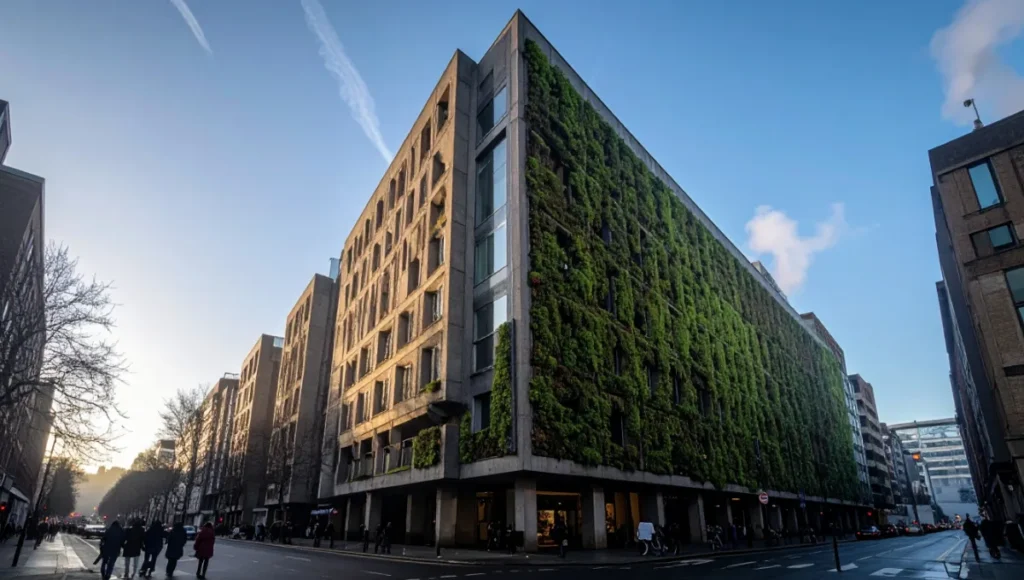
The climate crisis is no longer a peripheral threat; it is a macro-environmental reality forcing a radical re-evaluation of our existing concrete stock. Retrofitting brutalist architecture represents the single greatest opportunity to mitigate the 40% of global CO2 emissions attributed to the built environment. As urban temperatures in cities like Rotterdam fluctuate by as much as 10 degrees Celsius due to the heat island effect, the monolithic thermal mass of Brutalism must transition from a liability into a high-performance asset. We are moving beyond the era of demolition; we are entering the era of the high-density carbon-negative retrofit.
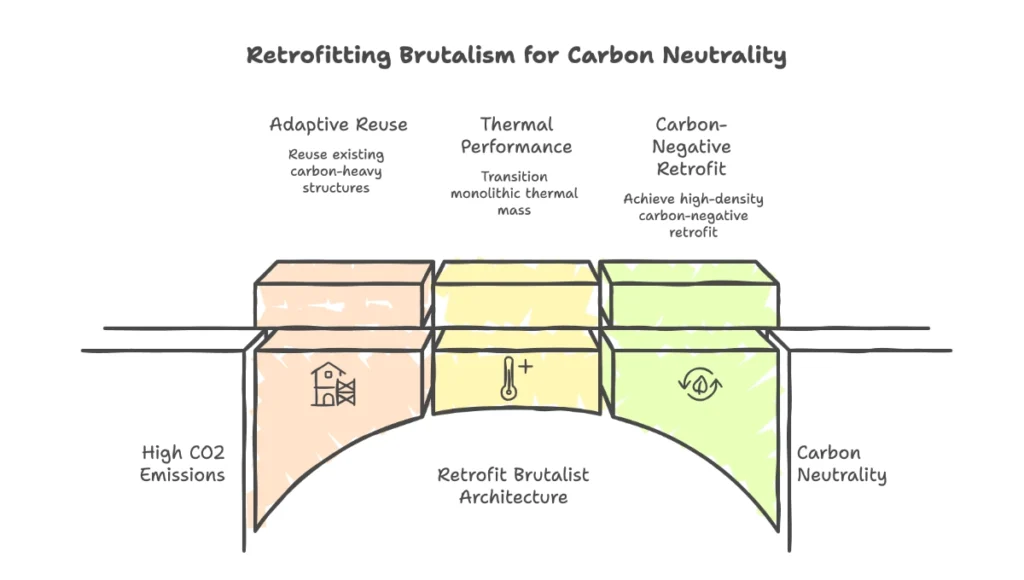
According to the American Institute of Architects (AIA) 2030 Commitment, the industry must pivot toward carbon neutrality immediately. The AIA highlights that for many firms, the most sustainable building is the one that already exists. By focusing on the adaptive reuse of carbon-heavy structures, you are not just saving a building; you are preventing a “carbon bomb” from exploding during the demolition process.
Nuvira Perspective
At Nuvira Space, we view the “Gray Gold” of the 20th century not as a relic of aesthetic austerity, but as a massive, pre-funded carbon bank. Every cubic meter of reinforced concrete embodies approximately 200 to 600 kg of CO2. To demolish these structures is to liquidate our remaining carbon budget. Our institutional stance is clear: true regenerative infrastructure requires the surgical integration of 21st-century material science into 1960s structural skeletons. We don’t just “fix” buildings; we recalibrate their molecular and thermal performance for a post-carbon future. This philosophy aligns with our ongoing research into carbon-negative concrete, where we explore how modern chemistry can heal the architectural scars of the past.
Technical Deep Dive: 5 Masterful Upgrades
To achieve a 100% reduction in operational carbon, you must address the fundamental thermodynamic failures of raw concrete. This requires a shift in mindset from “surface-level renovation” to “deep-core retrofitting.”
1. Aerogel-Enhanced Thermal Envelopes
Brutalist facades typically consist of 200 mm to 300 mm thick pre-cast concrete panels with 0 insulation. This results in a U-value of roughly 2.5 W/m²K—an thermal disaster by modern standards.
- The Upgrade: Integrating 10 mm to 20 mm of Silica Aerogel blankets internally. Unlike traditional mineral wool, which requires significant depth, aerogel allows for ultra-slim profiles that preserve interior square footage.
- The Spec: Aerogel provides a thermal conductivity of 0.015 W/mK.
- The So What: By reducing the U-value to 0.28 W/m²K, you eliminate the “refrigerator effect” where the concrete radiates cold into the living space, reducing heating demand by 60%. For developers, this translates to a 15% increase in usable internal floor area compared to traditional 100 mm insulation boards.
2. Phase Change Material (PCM) Integration
Concrete has high thermal mass but poor thermal regulation. It “soaks” heat but releases it unpredictably, leading to massive spikes in HVAC demand.
- The Upgrade: Micro-encapsulated PCMs embedded in internal 12.5 mm gypsum board retrofits or specialized renders.
- The Spec: PCMs with a melting point of 23 degrees Celsius, engineered to manage specific local climate variables.
- The So What: These materials absorb latent heat during the day and release it at night. In a 1,000 square meter floorplate, this can shift peak cooling loads by 4 to 6 hours. This enables the building to bypass the most expensive and carbon-intensive grid periods, a critical step toward the 15-minute city feasibility where localized energy resilience is paramount.
3. High-Performance Vacuum Insulated Glass (VIG)
Original Brutalist windows are usually single-pane steel-framed units with a U-value of 5.8 W/m²K. They are effectively “thermal holes” in the building’s armor.
- The Upgrade: Replacing glazing with 8 mm to 10 mm VIG units. These units utilize a vacuum gap rather than an inert gas to stop thermal transfer.
- The Spec: Center-of-glass U-value of 0.4 W/m²K.
- The So What: You maintain the ultra-slim profiles required by historic preservation boards while achieving the insulation performance of a 300 mm brick wall. This ensures the building remains a viable candidate for regenerative infrastructure without losing its “landmark” status.
4. Electrochemical Carbonation Treatment
Existing rebar in Brutalist structures often faces carbonation-induced corrosion after 50 to 60 years. As CO2 penetrates the concrete, the pH drops, causing the steel to rust and expand, leading to “concrete spalling.”
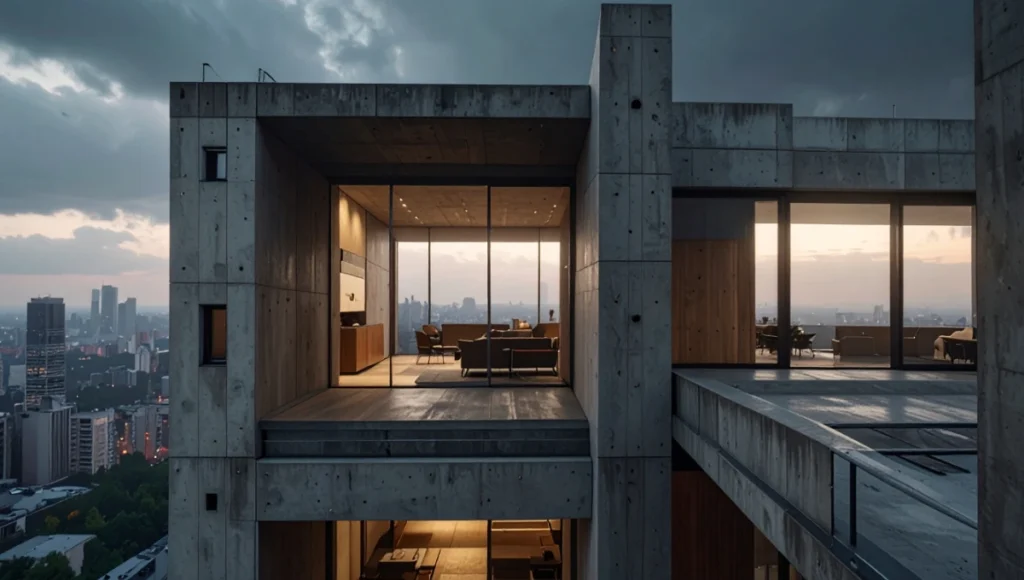
- The Upgrade: Impressed Current Cathodic Protection (ICCP).
- The Spec: 10 mA to 20 mA per square meter of concrete surface, monitored by a digital twin system.
- The So What: This electrochemical process re-alkalizes the concrete, extending the structural lifecycle by 50 to 100 years. This avoids the use of new, high-emission Portland cement reinforcements, a key strategy discussed in our analysis of generative AI architecture, which we use to predict structural failure points before they occur.
5. Algorithmic Solar Shading (BIPV)
Brutalist “Béton brut” often suffers from solar gain through large, unshaded apertures, particularly in high-density urban environments.
- The Upgrade: Custom-etched Building-Integrated Photovoltaics (BIPV) as “fins” or vertical slats.
- The Spec: 200 Wp per square meter glass-glass modules with 40% transparency.
- The So What: These fins act as a regenerative infrastructure component, generating 15% of the building’s total energy needs while providing passive shading that reduces AC loads by 25%. This is the ultimate synthesis of form and function: the building’s ornament is its engine.
Comparative Analysis: Nuvira Standard vs. Industry Standard
| Feature | Industry Standard (Renovation) | Nuvira Masterful Upgrade (Retrofit) |
|---|---|---|
| Material Goal | Energy Efficient | Carbon-Negative |
| Insulation | 50 mm Mineral Wool (U=0.35) | 20 mm Aerogel (U=0.15) |
| Lifecycle | 20-Year Maintenance Cycle | 80-Year Structural Extension |
| Energy Source | Grid-Dependent (Renewable) | Self-Generating BIPV Skin |
| Interior Climate | Mechanical HVAC Reliance | Passive PCM Thermal Buffering |
| Design Methodology | Manual Survey | AI-Driven Structural Optimization |
Concept Project Spotlight: Speculative / Internal Concept Study “The Monolith Reborn” by Nuvira Space
Project Overview
- Location: London, UK (Barbican-Adjacent)
- Typology: Adaptive Reuse / Residential High-Rise
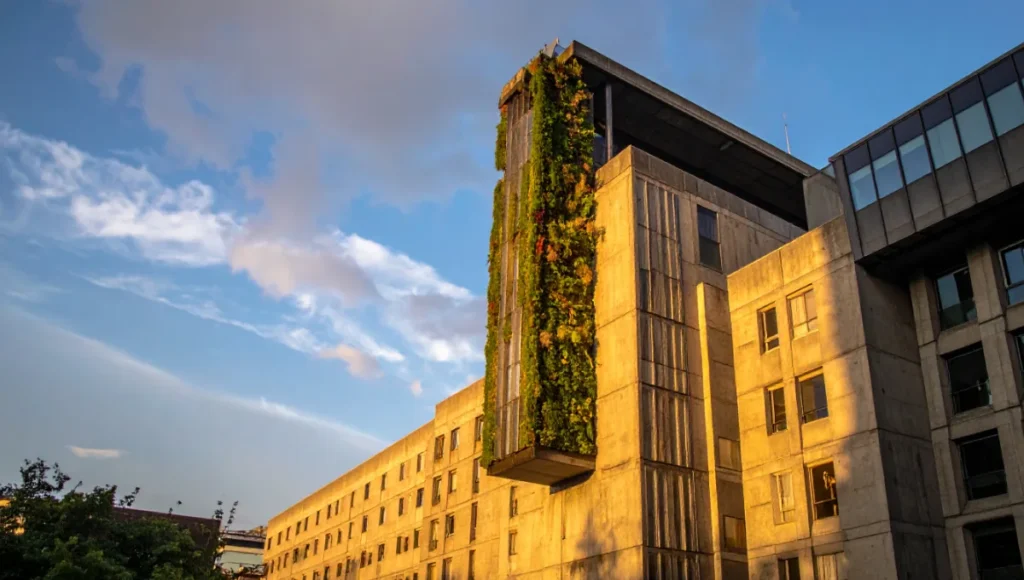
- Vision: Converting a 12,000 square meter decommissioned telecommunications hub into a regenerative infrastructure icon.
Design Levers Applied
- Structural Repurposing: Retention of 100% of the 5,000 cubic meter concrete frame, preventing 1,500 tonnes of CO2 emissions from new material production.
- Façade Intervention: Application of a 5 mm “Graphite-Infused” breathable coating to prevent moisture ingress while allowing the concrete to “breathe.” This is coupled with algae-bio-curtains on the southern facade to actively scrub CO2 from the local air.
- The “Lungs”: Installation of a 150 mm raised floor system containing decentralized HRV (Heat Recovery Ventilation) units with 90% thermal efficiency.
- Visualizing the Future: We utilized Unreal Engine 5 architecture workflows to simulate real-time thermal performance, ensuring that the interplay of shadow and light did not result in cold spots.
Transferable Takeaway
You must treat the building as a thermodynamic system rather than an aesthetic object. The success of “The Monolith Reborn” proves that retrofitting brutalist architecture is 30% cheaper than new construction when the avoided cost of carbon taxes and demolition are factored into the 50-year Pro Forma. Furthermore, by integrating flexible home design, the interior floorplates can evolve over the next 100 years without further structural modification.
2030 Future Projection
By 2030, building codes will move from “Net Zero” to “Absolute Zero.” In this landscape, the embodied carbon in Brutalist buildings becomes a tradable commodity. We project that cities will implement “demolition moratoriums” on any structure containing more than 1,000 tonnes of embodied CO2.
The AIA’s recent case studies suggest that the next decade of architecture will be defined not by what we build, but by what we refuse to destroy. Your role as a developer or architect will shift from a “creator” to a “steward” of existing molecules. The Brutalist towers of the past—once seen as oppressive monuments to institutional power—will become the carbon-negative power plants of the future. We may even see these structures integrated into urban rewilding examples, where concrete terraces support vertical forests that mitigate urban heat.
Comprehensive Technical FAQ
Q: Does retrofitting compromise the “raw” aesthetic of Brutalism?
A: No. By using internal aerogel linings (10 mm) and external hydrophobic coatings (0.5 mm), you preserve 100% of the external board-marked concrete texture. Our goal is to achieve Passive House performance standards without the “wrapping” of the building in generic EIFS (Exterior Insulation Finishing Systems).
Q: What is the ROI on VIG vs. Triple Glazing for these projects?
A: While VIG is 40% more expensive upfront, the weight reduction (VIG is 1/3 the weight of triple glazing) is the game-changer. You can use the original 1960s steel or concrete window frames, saving 20% on total facade installation costs and reducing the structural load by 15 kg per square meter.
Q: How do you handle thermal bridging in cantilevered concrete balconies?
A: You apply structural thermal breaks via “Diamond Sawing” and inserting 80 mm high-strength insulation modules at the slab junction. This prevents the 3 to 5 degree Celsius heat loss typically seen at the slab edge, which causes condensation and mold internally.
Q: Is this approach applicable to micro-living?
A: Absolutely. In fact, Brutalist floorplans are ideal for micro-living layouts because of their large, open structural spans. By removing internal non-load-bearing walls, you can create high-density, high-efficiency housing that meets the needs of a growing urban population.
Step Into the Regenerative Era
The era of “green building” is over; the era of regenerative infrastructure has arrived. Retrofitting brutalist architecture is the most potent tool in your arsenal to combat climate volatility. It is a commitment to the material truth of the past and the environmental necessity of the future.
Are you ready to unlock the carbon bank within your portfolio? Contact Nuvira Space today to initiate a Technical Feasibility Audit for your next masterful upgrade and lead the transition to a carbon-negative built environment.