

Table of Contents
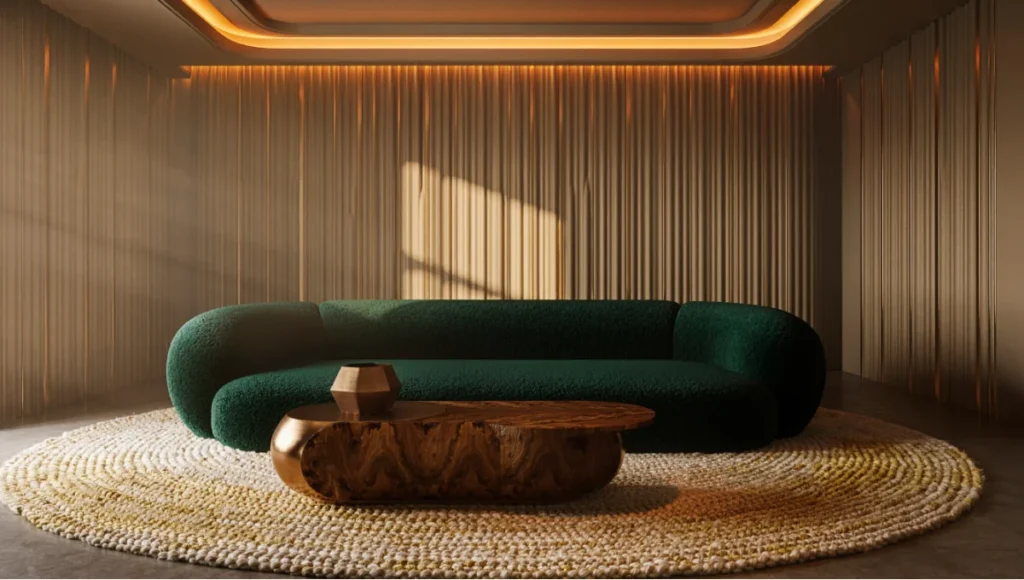
The macro-observation of global residential shifts in 2026 reveals a distinct “Sublime Revival”—a reaction to the sterile, hyper-minimalist “white box” era that dominated the early 2020s. This movement is anchored by Neo Deco living room ideas 2026, where the brain’s evolutionary craving for pattern, rhythm, and material depth is finally addressed through the lens of neuro-architecture. We are no longer just looking at a revival of 1920s glamour; we are witnessing the birth of a sophisticated, evidence-based aesthetic that treats the home as a biological support system.
As urban density increases and our external environments become more volatile, the living room is being reclaimed as a “psychological fortress.” In this context, the Neo Deco revival isn’t just a stylistic choice; it is a clinical intervention designed to mitigate the sensory tax of modern life.
Nuvira Perspective
At Nuvira Space, we view the traditional concept of “decor” as an obsolete relic of the static era. We do not design for aesthetics; we design for human-machine synthesis. To us, the home is a “health machine”—a responsive exoskeleton that breathes, shifts, and synchronizes with your physiological needs. By integrating modular adaptability with robotic precision, we are moving past the era of “living in a room” and into the era of “interacting with a spatial interface.” For Nuvira, a living room is a high-performance laboratory where circadian lighting and kinetic volumes work in tandem to optimize your pre-frontal cortex and metabolic health. We believe that the next frontier of luxury is not found in the price of a material, but in its ability to regulate the inhabitant’s nervous system.
Technical Deep Dive: Implementing Neo Deco Living Room Ideas 2026
The 2026 Neo Deco movement is defined by “Softened Geometry”—the strategic use of mathematical curves to reduce the amygdala’s “sharp object” threat response. Unlike the original Art Deco, which utilized jagged zigzags and aggressive sunbursts, Neo Deco 2026 utilizes the “Sinuous Path” to facilitate easier ocular tracking and lower cognitive load.
1. Kinetic Materiality: The Sensory Core of Neo Deco Living Room Ideas 2026
In 2026, surfaces are selected for their “Proprioceptive Feedback.” When you touch a surface in a Nuvira-designed space, the brain should register a clear, grounding signal.
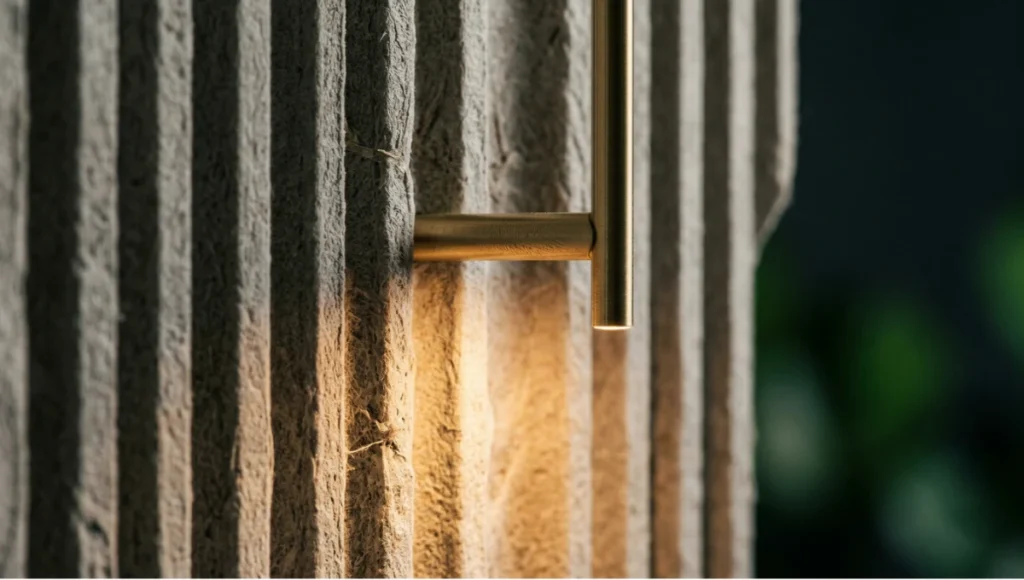
- The Spec: Mycelium-composite wall panels with CNC-routed fluted patterns.
- The Impact: These surfaces absorb high-frequency urban noise (acoustic dampening < 0.45 NRC) while providing visual fractals that lower cortisol levels by up to 15%. This aligns with the mycelium furniture innovations currently disrupting the circular construction market.
- Metals: Brushed “living” brass and matte-smoked chrome. Unlike the high-glare surfaces of 2024, 2026 metals are diffuse-reflective to prevent “light scatter” that interferes with visual focus.
2. Circadian Synchronization: Lighting Your Neo Deco Living Room Ideas 2026
The Neo Deco living room of 2026 is a light-harvesting machine. We leverage the circadian lighting systems logic to ensure that domestic life does not interfere with biological rhythms.
- The Spec: Dynamic LED arrays mimicking a 1,800K to 6,500K spectrum.
- The Impact: By automating the shift from blue-rich morning light to near-infrared “Amber Glow” in the evening, we entrain the Suprachiasmatic Nucleus (SCN), ensuring melatonin production is never suppressed by domestic activity. This is critical in the Neo Deco aesthetic, where rich, dark jewel tones (emeralds, deep navies) require high-CRI (Color Rendering Index) lighting to remain vibrant without feeling oppressive.
3. Spatial Pacing and “The Prospect-Refuge” Ratio
Neo Deco in 2026 uses architectural “pacing”—the deliberate control of how quickly the eye moves across a room. By using fluted textures and repetitive rhythmic moldings, we create a “visual hum” that occupies the peripheral vision without demanding active attention. This technique is grounded in the AIA Framework for Design Excellence, specifically the “Design for Well-being” section, which emphasizes the need for spatial volumes that facilitate both social connection and restorative privacy.
Comparative Analysis: Neuro-Architecture vs. Traditional Decor
The following table breaks down why the “Sublime Revival” of Neo Deco is a structural evolution rather than a surface-level trend.
| Feature | Industry Standard Decor | Nuvira Neo Deco 2026 |
|---|---|---|
| Primary Goal | Visual prestige and trend-following | Biological sovereignty and cognitive recovery |
| Spatial Flow | Obstructed (furniture as obstacles) | Fluid (monolithic volumes and “Clear Sightlines”) |
| Lighting | Static/Manual (on/off) | Automated Circadian Synchronization |
| Materials | Synthetic/Surface-level | Regenerative/Bio-integrated (Mycelium, Stone) |
| Tech Integration | Visible devices and cables | “Invisible Intelligence” (Embedded sensors) |
| Acoustics | Passive (rugs/curtains) | Active (Geometric diffusers/NRC-rated surfaces) |
Concept Project Spotlight: Speculative / Internal Concept Study “The Rotterdam Refractive” by Nuvira Space
Project Overview: Rotterdam, Netherlands / Residential Adaptive
In the high-density urban environment of Rotterdam, the challenge was to create a Neo Deco sanctuary that mitigates the “sensory tax” of a bustling port city. Rotterdam’s architecture is already a masterclass in modern geometry, but the “Rotterdam Refractive” takes this further by internalizing the city’s maritime industrialism into a soft, Neo Deco interior.
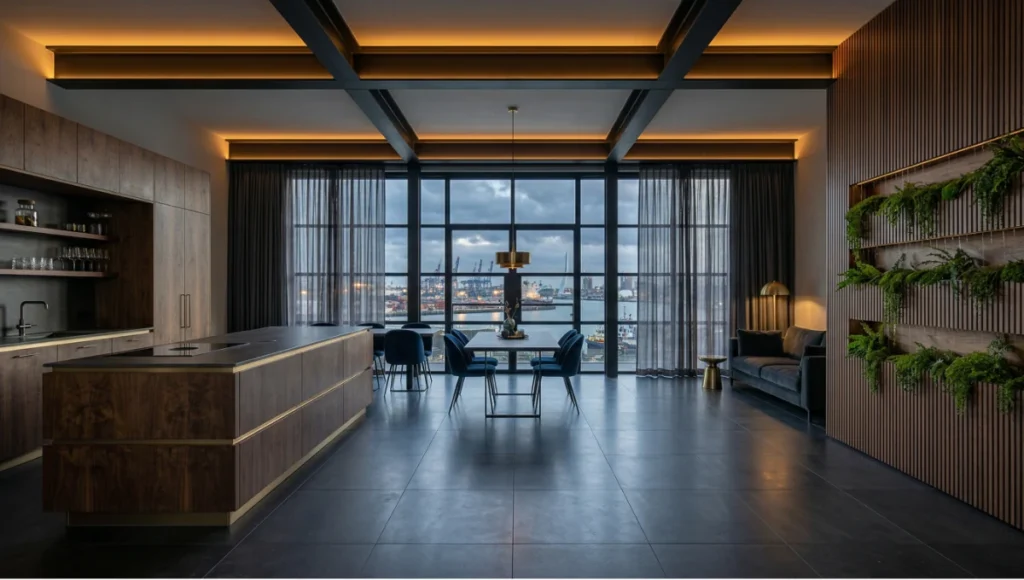
monolithic island, hydroponic fluted wall panels with live moss, charcoal
atmospheric curtain acoustic zoning, and amber LED cove over honed basalt
floors — neuro-architecture for high-density urban residential design,
Rotterdam Netherlands.
Design Levers Applied to Neo Deco Living Room Ideas 2026:
- Atmospheric Zoning: The living area is divided not by walls, but by “Atmospheric Curtains”—variable-density textiles that serve as acoustic buffers. These curtains are treated with specialized coatings, drawing from our research on algae bio-curtains to actively scrub CO2 from the internal air.
- Monolithic Anchor: A central, 4-meter-long “Burl-and-Bronze” island that serves as a kitchen, workstation, and social hub, reducing visual clutter by centralizing all utility.
- Biophilic Veins: Integrated hydroponic channels in the fluted wall panels that circulate nutrient-rich water, acting as both a natural humidifier and a “Green Lung.”
Transferable Takeaway
You can apply the same logic at home by tuning evening lighting to a 2200K amber hue after 8 PM, building a “refuge corner” where your seating has a solid wall behind it (The Prospect-Refuge Theory), and simplifying one primary sightline toward a natural anchor—like a single large plant or a window—to give your brain a rest from visual complexity.
Evidence-Based Design: The AIA Connection
Our methodology is heavily influenced by the American Institute of Architects (AIA) “Design for Well-being” guidelines. The AIA advocates for “experiential research”—the idea that we must understand the sensory experience of an environment before we design it.
Recent AIA case studies in healthcare (such as the Alpas Wellness project) have shown that “bottom-up” sensory processing—the immediate tactile and visual response to a room—is the most powerful tool an architect has to reduce patient (or inhabitant) stress. In the Neo Deco Living Room of 2026, we take these clinical findings and apply them to the domestic sphere. We utilize what the AIA describes as the “Aesthetic Triad”:
- Sensorimotor System: Tactile fluting and diffuse lighting.
- Knowledge-Meaning System: The cultural resonance of the “Deco” heritage.
- Emotion-Valuation System: The sense of luxury and safety provided by monolithic furniture.
Intellectual Honesty: Current Limitations of Neo Deco Living Room Ideas 2026
While Neo Deco 2026 provides a superior biological environment, the cost of “Health Machine” integration remains high. Fully synchronized circadian systems and mycelium-based joinery are currently restricted to the luxury tier. Furthermore, the longevity of certain bio-regenerative materials is still being mapped; we are effectively in a global “beta test” for the regenerative home. We must also acknowledge that “Softened Geometry” requires more floor area than traditional modular furniture, making it a challenge for the micro-living layouts often found in hyper-dense urban cores.
2030 Future Projection: The Sentient Space
By 2030, we expect the Neo Deco aesthetic to become “Sentient.” The fluted walls will contain flexible haptic sensors that allow the room to adjust its temperature and acoustic profile based on the heart rate and respiratory patterns of the inhabitant, detected via ultra-wideband (UWB) sensing—no wearables required. The room will effectively “inhale” when you enter, adjusting the atmospheric pressure and oxygen concentration to optimize your current cognitive state, whether you are entering a “Deep Work” flow or a “Restorative Sleep” cycle.
Actionable Design Principles for the Sublime Revival
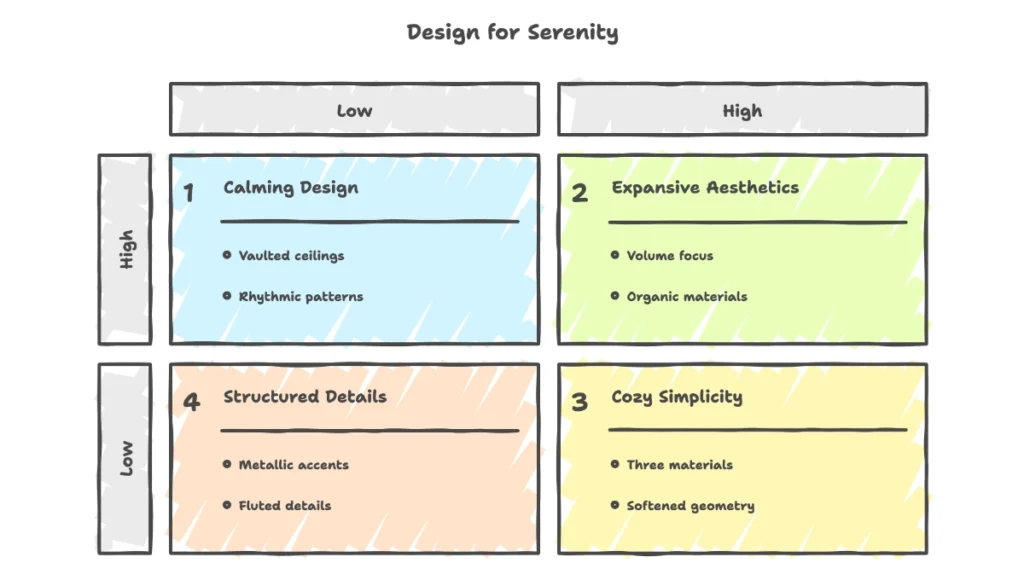
- Prioritize Volume Over Area: Focus on the height and the “breathability” of the room rather than filling the floor plate. A vaulted ceiling with a Neo Deco cove light provides more psychological “room to breathe” than an extra 50 square feet of floor space.
- The 3-Material Rule: To maintain a “Sublime” feel, limit your primary materials to three: One organic (Wood/Stone), one mineral (Clay/Plaster), and one metallic (Brass/Chrome).
- Softened Geometry: Replace sharp-angled coffee tables or consoles with pill-shaped or elliptical volumes to reduce the brain’s “collision alert” signals.
- Rhythmic Repetition: Use fluted wall details or slatted dividers to create a sense of order. The brain finds comfort in predictable patterns; this is why the “Deco” element of Neo Deco is so effective at reducing anxiety.
Comprehensive Technical FAQ for Neo Deco Living Room Ideas 2026
Q: How does Neo Deco 2026 differ from the 2020s “Mid-Century Modern” trend?
A: Mid-Century Modern focused on mass production and slim-legged “floating” furniture to create a sense of lightness. Neo Deco 2026 prioritizes:
- Chunky/Monolithic Profiles: Furniture that feels “anchored” to the ground to provide a sense of permanence and safety (Gravitational Grounding).
- Sensory Intelligence: Every material is chosen for its biological impact (Haptic feedback) rather than just its era-appropriateness.
Q: Is the “Circadian Lighting” truly necessary for a living room?
A: From a neuro-architectural perspective, yes. Research shared at the AIA Conference on Architecture confirms that light is the primary driver of the human biological clock.
- Morning (8 AM – 11 AM): 5500K-6500K light triggers cortisol for alertness.
- Evening (8 PM – 11 PM): <2200K light facilitates the “Sleep Gate.” Without this shift, you are in a state of “Social Jetlag,” which has been linked to chronic inflammation and cognitive decline.
Q: Can I achieve Neo Deco without a full renovation?
A: Absolutely. Focus on these specs:
- Lighting: Replace standard bulbs with smart LEDs capable of “Amber Shift.”
- Texture: Introduce a “Tactile Layer”—a bouclé chair or a fluted wood side table.
- Geometry: Add a circular rug to break up the rigid grid of a rectangular room. This immediately signals to the brain that the space is designed for “repose” rather than “utility.”
Elevate Your Biological Sovereignty
The Living Room is no longer a showroom; it is the interface through which you interact with your life. By adopting the principles of Neo Deco living room ideas 2026, you are choosing to prioritize your nervous system over passing fads. We are entering a phase of human history where our environments must do more than just house us; they must actively heal us.
Join the Nuvira Intelligence Network to receive our upcoming technical white paper on “Neuro-Acoustics in the Modern Penthouse.” Transform your space into a machine that works for you.