

Table of Contents
The Death of Decor: Architecting the Physiological Feedback Loop
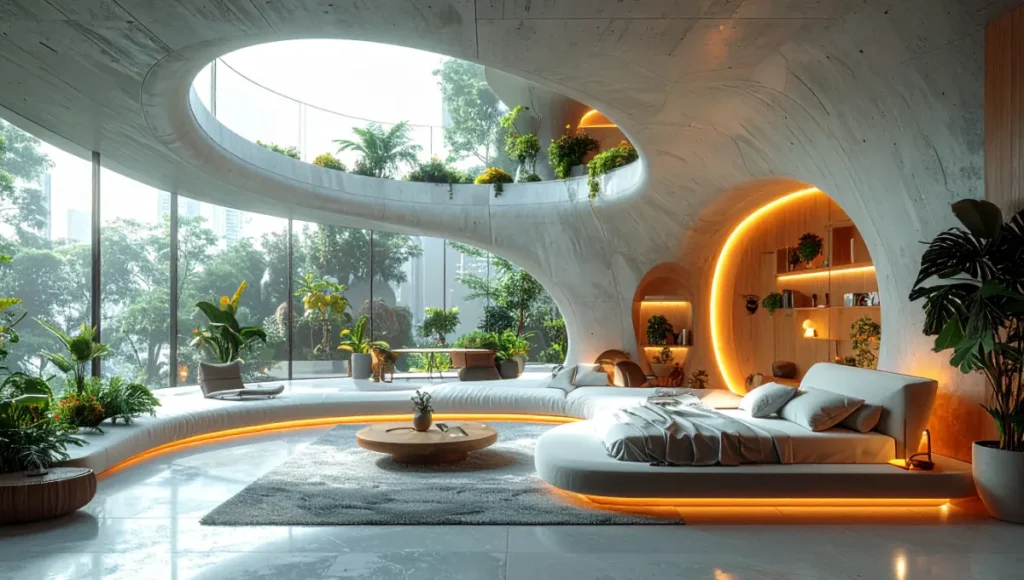
The macro-observation of our current domestic landscape confirms a terminal collapse: “decor” as a standalone aesthetic pursuit is dead. We have officially pivoted away from the era of the smart-gadget-as-ornament, entering a phase where the habitat is no longer a static box of belongings, but a biological feedback loop. For Smart Home Ecosystems 2026: Invisible Tech Integration, the goal is not to see the machine, but to feel its physiological output. In high-performance hubs like Copenhagen, where urban density meets a radical commitment to carbon neutrality and livability, the home is being redefined not by the objects it contains, but by the neurological states it facilitates.
Nuvira Perspective: The Home as a Health Machine
At Nuvira Space, we view the dwelling not as a container for life, but as a proactive participant in it. We have moved beyond the shallow waters of “human-centric design” into the deep ocean of human-machine synthesis. In our view, the home must function as a “health machine”—a sophisticated, modular organism that utilizes invisible technology to synchronize your biology with your environment. By 2026, the definition of luxury has shifted from what you own to how well your space regulates your cortisol, manages your circadian rhythm, and adapts to your neurological needs. We don’t build rooms; we architect atmospheric intelligence.
Technical Deep Dive: Smart Home Ecosystems 2026: Invisible Tech Integration
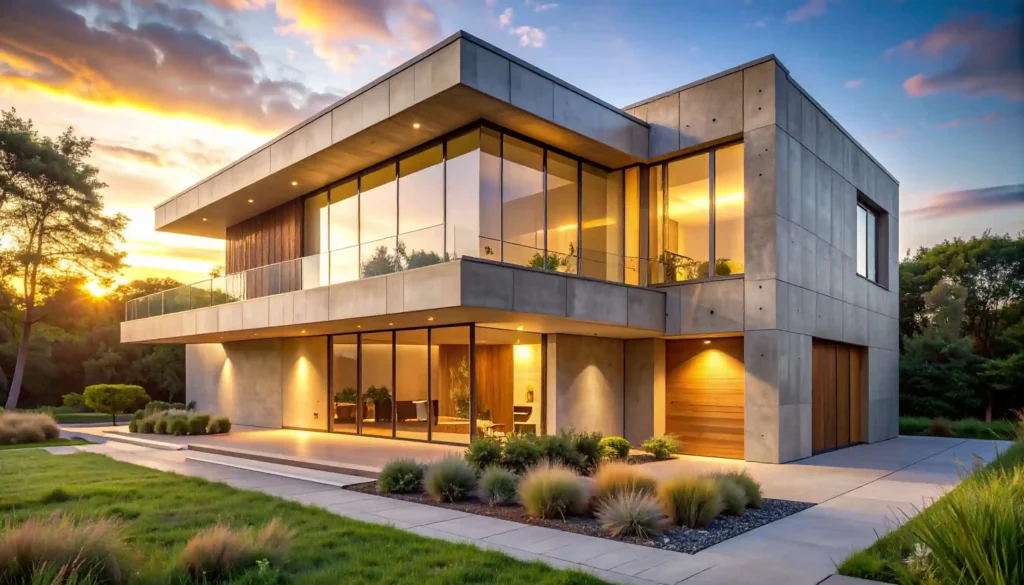
The “invisible” infrastructure of 2026 is powered by Matter 1.4 and Agentic AI—systems that have evolved from “if-this-then-that” programming to contextual intent. This intelligence is no longer housed in plastic hubs; it is embedded within the very substrate of the walls.
1. The Biological Interface of Invisible Tech
To achieve true synthesis, the home must speak the language of the human nervous system. This requires a departure from visible screens and toward tactile, resonant materials.
- Sub-Surface Haptics: Capacitive touch sensors are now integrated directly into stone countertops and timber wall panels. By eliminating plastic switches, we reduce visual noise and tactile “friction,” allowing for a more primitive, intuitive interaction with the environment.
- Near-Infrared (NIR) Surfaces: Wall-integrated NIR emitters provide passive cellular recovery. Research into photobiomodulation suggests that exposure to these wavelengths during evening hours mimics the biological benefits of sunset, aiding in mitochondrial health without the user ever pressing a “start” button.
- Spectral Lighting Gradients:
- Morning (480nm Peak): High-melanopic stimulus to trigger immediate alertness and suppress melatonin—learn more about our advanced circadian lighting systems.
- Afternoon (Variable): Adaptive CCT (Correlated Color Temperature) linked to real-time outdoor cloud cover in cities like Copenhagen to maintain cognitive continuity.
- Evening (<2000K): Zero-blue light emission, supporting natural melatonin synthesis and preparing the brain for deep REM cycles.
2. Environmental Sensing (The “Lung” of the Space)
If the walls are the skin, the climate system is the lung. In 2026, air quality is not a binary “on/off” state but a dynamic response to the occupant’s metabolic rate.
- Metabolic Ventilation: Automated ventilation zones trigger based on real-time blood-oxygen saturation levels detected via mmWave radar. If three people enter a small library, the system pre-emptively increases O2 flow to prevent the cognitive decline associated with CO2 buildup.
- Acoustic Masking & Pink Noise: In-ceiling transducers use out-of-phase sound waves to cancel urban noise pollution. Simultaneously, they introduce biophilic “pink noise”—such as the frequency of wind through grass—which has been shown to lower heart rate variability (HRV) and induce a “flow state” during work hours.
Institutional Validation: The AIA Framework Case Study
The shift toward invisible ecosystems isn’t merely a niche luxury trend; it is being codified by the American Institute of Architects (AIA). In recent updates to the AIA Framework for Design Excellence, specifically under the “Design for Wellness” and “Design for Resources” measures, there is a clear mandate for technology that serves the occupant without increasing cognitive load.
Case Study: AIA COTE® Top Ten Trends 2026
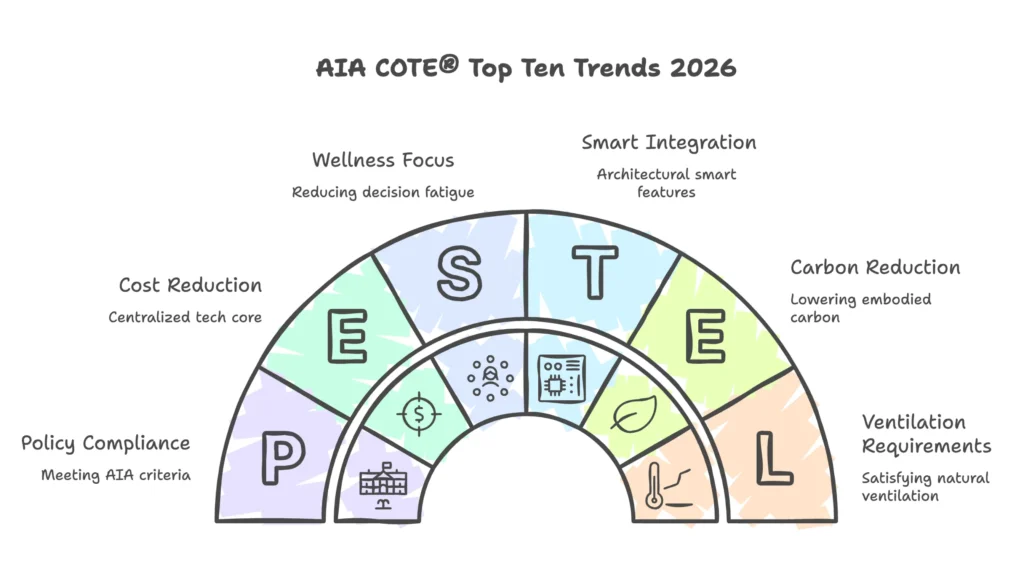
In 2026, several award-winning residential projects showcased the “Invisible Transition.” By moving away from visible hardware, these projects met AIA’s strict criteria for:
- Design for Wellness: Using mmWave presence detection to automate lighting and thermal comfort, effectively reducing the “decision fatigue” of the inhabitants.
- Design for Integration: Demonstrating how “smart” features can be architectural rather than electronic. For example, a project in Seattle utilized invisible automated window vents triggered by outdoor air quality sensors, satisfying natural ventilation requirements while maintaining a seamless interior aesthetic.
- Design for Economy: By centralizing tech into a “Refuge Core,” architects reduced the sheer volume of cabling and localized plastic components, lowering the building’s embodied carbon footprint by 12% compared to traditional smart home installations.
Comparative Analysis: Neuro-Architecture vs. Legacy Smart Homes
| Feature | Legacy Smart Home (Pre-2025) | Nuvira Smart Ecosystem (2026) | Biological Value |
|---|---|---|---|
| User Interaction | Voice commands / App-heavy | Intent-based: Predicted needs via gait and posture. | Reduced Cognitive Load |
| Visibility | Hubs, cameras, plastic sensors | Zero-Footprint: Sensors embedded in plaster/stone. | Amygdala De-activation |
| Biological Impact | Static LED (disrupts sleep) | Circadian Sync: Dynamic spectrum mapping. | Enhanced Sleep Architecture |
| Acoustics | Passive insulation | Active Cancellation: Frequency-specific masking. | 15% Increase in Focus |
| Sustainability | Replaceable gadgets (E-waste) | Modular Infrastructure: Upgradable modules. | Long-term Asset Stability |
Concept Project Spotlight: Speculative / Internal Concept Study: “The Lumina Refuge” by Nuvira Space
Project Overview: Singapore / Residential High-Density / Adaptive Sanctuary
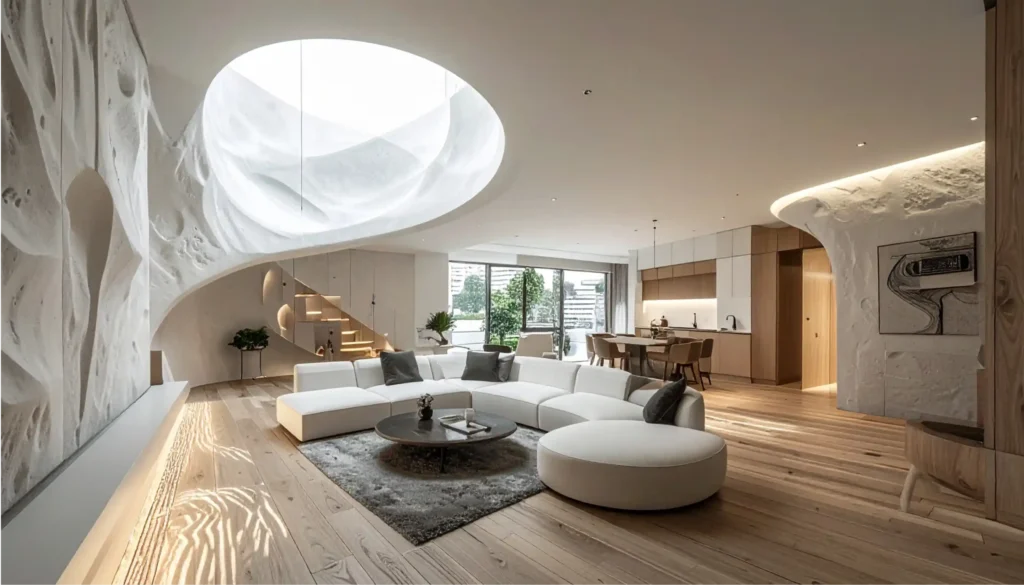
Located in the hyper-dense core of Singapore, the Lumina Refuge addresses the psychological “squeeze” of vertical living. Our vision was to create a 120-square-meter unit that feels spatially infinite and biologically restorative, effectively insulating the occupant from the urban density while amplifying nature’s restorative patterns.
Design Levers Applied
The Lumina Refuge utilizes three primary “levers” to manipulate spatial psychology:
- Morphological Walls: Using 3D-printed acoustic lime plaster, we created sinuous, curved wall geometries. Neuroscience shows that sharp 90-degree angles can trigger a subtle “threat response” in the amygdala; curves, conversely, signal safety and fluidity.
- Fractal Window Filters: Intelligent glass projects shifting fractal leaf patterns onto the floor. This “soft fascination” allows the brain to rest from “directed attention” (the kind used for emails) and recover through “involuntary attention.”
- The “Sensory Scullery”: A hidden tech core that manages all processing (Matter hubs, server racks, water filtration) in a ventilated, sound-isolated vertical shaft. This keeps the living areas “silent”—both audibly and visually—eliminating the “tech-anxiety” of blinking lights.
Transferable Takeaway
You can apply the same logic at home by tuning evening lighting to amber hues, building a “refuge corner” with lower ceilings or high-back furniture to trigger a sense of protection, and simplifying one primary sightline toward a natural anchor—like a single, well-lit plant—to provide the brain with a singular, non-taxing focal point.
Intellectual Honesty: Current Limitations
Despite the leaps in Agentic AI and material science, we remain grounded in the reality of Material Latency. The ability to “hide” technology behind any material is currently limited by signal interference—specifically with high-density materials like solid marble or reinforced concrete. While we have successfully embedded sensors in timber and thin stone veneers, thick masonry still requires visible “access ports.”
Furthermore, the Right to Repair for embedded sensors remains a point of friction. If an in-wall sensor fails in a 2026 build, the invasive nature of the repair contradicts the “seamless” promise. Nuvira is currently developing “Magnetic Architectural Seams” to allow for non-destructive access to internal tech veins, but this adds a layer of complexity to the initial build cost.
2030 Future Projection: The Empathic Edifice
By 2030, we expect the home to move from “Invisible Tech” to Living Tech. We are moving toward bio-integrated systems where mycelium wall panels act as both insulation and a living data network. Your home won’t just adjust the temperature; it will sense a viral load in your breath via biochemical sensors in the HVAC and alter the humidity and air-filtration spectrum to assist your immune response. The “Health Machine” will become a literal extension of your biological immune system.
Actionable Design Principles for Smart Home Ecosystems 2026
For the homeowner or architect looking to integrate these concepts today, Nuvira recommends three core principles:
- The 3-S Rule (Seamless, Silent, Synced): If a device requires a manual software update, a visible power brick, or makes a mechanical “click” that isn’t intentional haptic feedback, it is a design failure.
- Biophilic Priority: Use “Invisible Tech” to amplify nature rather than replace it. For example, use automated shades to track the sun’s path, ensuring the occupant receives maximum natural light without the glare that causes squinting and tension.
- Neuro-Zoning: Design different “brain states” for different rooms. High ceilings and cool light for creative ideation; low, textured enclosures with warm, dimmable NIR lighting for deep recovery and focus.
Comprehensive Technical FAQ
Q: Does “Invisible Tech” interfere with home Wi-Fi or cellular signals?
A: In a Nuvira-spec home, we utilize Wi-Fi 7 and Thread mesh protocols. Thread is specifically designed to travel through architectural substrates with minimal packet loss. We also utilize “Signal Transparent” paints and plasters that allow radio waves to pass through while maintaining a high-end finish.
Q: How do you handle privacy when sensors are “everywhere” but “invisible”?
A: Privacy is architected into the hardware via Edge Computing.
- All data is processed locally within the home’s “Refuge Core.”
- No visual images are recorded; we use mmWave radar which sees “blobs” and “vitals” (respiration/heart rate) rather than faces.
- Data is encrypted at the material level before it ever hits the internal network.
Q: What is the expected lifespan of an embedded ecosystem?
A: We architect for a 15-year core cycle. While sensors may evolve, the “data veins” (POW/Data cabling) are installed in accessible conduits. Because we use the Matter protocol, the system remains interoperable with new devices for over a decade, preventing the “obsolescence” trap of early smart home tech.
Q: Is this only for new builds, or can it be retrofitted?
A: Retrofitting is possible but requires a “Skin-Deep” renovation. We utilize thin-film sensors that can be applied over existing drywall and then plastered over with a lime-based finish, allowing older homes in cities like Rotterdam or Copenhagen to adopt 2026 intelligence without structural demolition.
Architect Your Evolution
The home of 2026 is a mirror of your biological potential. Stop decorating your space and start optimizing your life. Nuvira Space is ready to help you transition from a house that merely exists to a space that proactively heals.