

Table of Contents
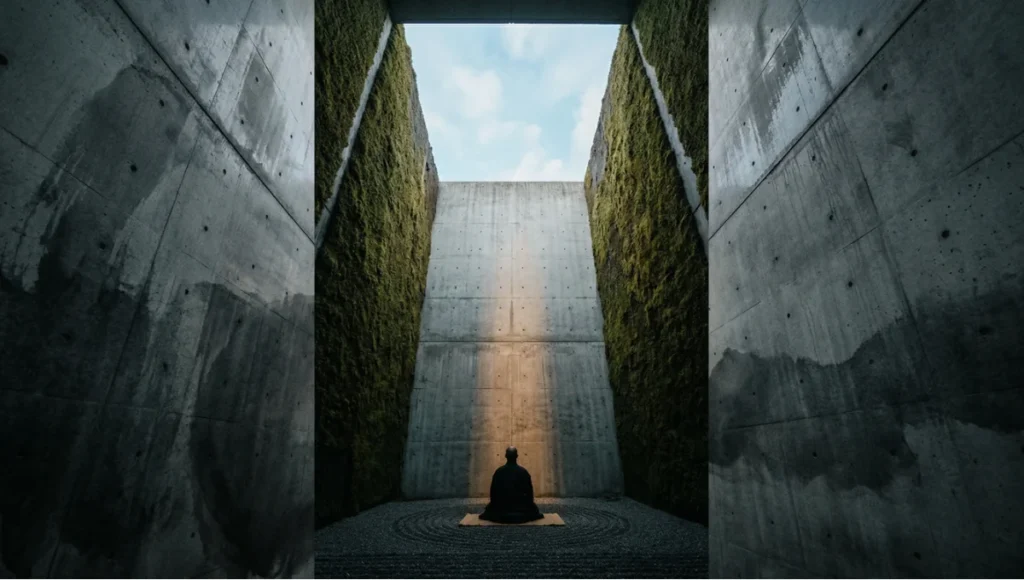
The traditional backyard is a vestigial organ of the 20th-century suburban model—a high-maintenance, water-intensive patch of lawn that offers little more than visual ornament. As we enter a new era of urban density and environmental volatility, the “void” within our homes must undergo a radical functional shift. By integrating sustainable spring courtyard design ideas, we are no longer just “decorating” an outdoor area; we are engineering a biological sanctuary. From a neuro-architectural standpoint, the courtyard is the lungs of the residence, a primary site for circadian resetting and autonomic nervous system regulation.
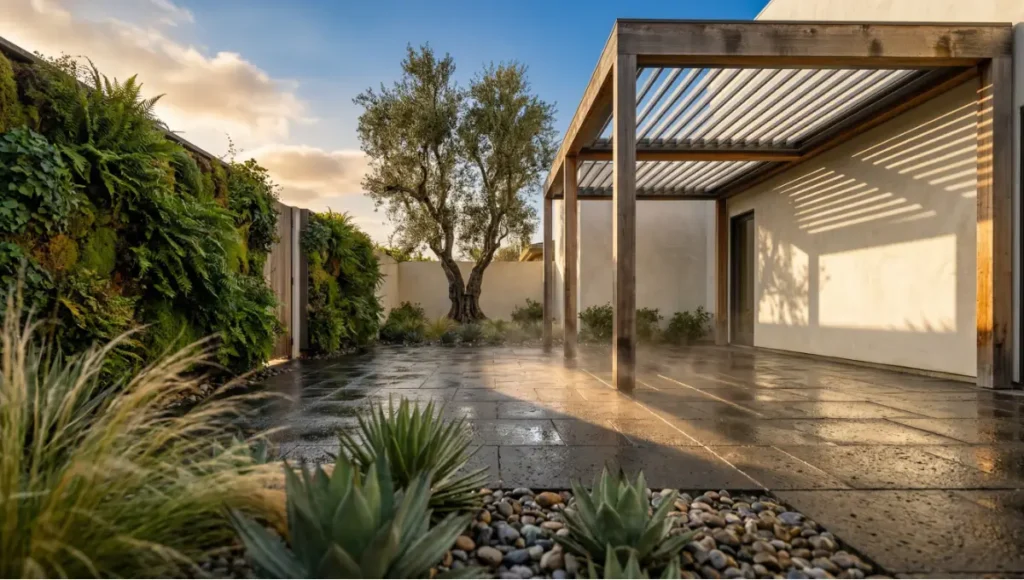
green walls, and drought-resistant landscaping for eco-zen urban living.
Nuvira Perspective: The Home as a High-Performance Health Machine
At Nuvira Space, we view the boundary between the carbon-based occupant and the silicon-integrated residence as a fluid, permeable membrane. We challenge the static definition of “home” by proposing a transition toward the “health machine”—a domestic ecosystem where modular adaptability and circadian synchronization are not features, but fundamental operating systems.
Our authority lies at the intersection of human-machine synthesis, where we use environmental data to optimize the physiological state of the dweller. In this context, the sustainable courtyard is the hardware interface for biophilic recovery, ensuring that the evolution of your living space aligns with the evolutionary needs of your DNA. Understanding the neuroarchitecture basicsis essential for anyone looking to build a home that actively heals rather than merely houses.
Technical Deep Dive: 7 Vital Sustainable Spring Courtyard Design Ideas
To move beyond the superficiality of “eco-decor,” you must understand the underlying mechanics of environmental psychology. These seven interventions prioritize biological value over aesthetic trends, aligning with the AIA Framework for Design Excellence regarding energy, water, and well-being.
1. Thermal Buffer Zones & Atmospheric Mediation
A sustainable courtyard should function as a passive climate control engine. By utilizing “stack effect” ventilation, the courtyard pulls cool air from the ground level and exhausts heat through the top of the structure.
- Technical Spec: Implementation of a 1:4 height-to-width ratio to optimize natural convection.
- Physiological Impact: Reduction in ambient noise and stabilization of indoor temperatures, lowering the cognitive load required for thermal regulation.
2. Circadian-Synchronized “Light Wells”
Spring is defined by the shifting angle of the sun. A neuro-architectural approach uses reflective surfaces—such as lime-wash or light-gauge aluminum—to bounce full-spectrum morning light into deep interior spaces. This architectural hardware works in tandem with internal circadian lighting systems to maintain hormonal balance.
- Technical Spec: Use of “high-albedo” materials (Solar Reflectance Index > 80) on south-facing courtyard walls.
- Biological Value: Suppression of melatonin and early-morning cortisol spikes to align your internal clock with the solar cycle. This mimics the AIA’s emphasis on “Design for Resources” by reducing reliance on artificial illumination.
3. Xeriscaping for Cognitive Rest (The “Soft Fascination” Principle)
Traditional gardens demand “directed attention” (weeding, mowing, pruning), which contributes to mental fatigue. Eco-Zen utilizes native, drought-resistant flora that thrives on neglect.
- Technical Spec: Hydro-zoning plant species based on precise evapotranspiration rates.
- Neural Response: Activation of “Attention Restoration Theory” (ART), where the brain recovers from high-beta wave exhaustion by observing complex, repetitive natural patterns.
4. Permeable Hardscaping & Hydrological Cycles
Concrete slabs create “heat islands.” Replace them with permeable gravel, recycled brick, or “grass-crete” to allow the earth to breathe and recharge.
- Technical Spec: Sub-surface drainage layers with a 15% minimum porosity.
- Environmental Benefit: Mitigation of urban runoff and local cooling through the latent heat of evaporation.
5. Acoustic Dampening via “Vertical Forests”
Sound pollution is a primary neuro-stressor. Utilizing vertical green walls acts as a multi-layered acoustic buffer.
- Technical Spec: 100mm substrate depth for living walls provides up to 10dB of noise reduction.
- Sensory Language: The rustle of wind through leaves (pink noise) masks the abrasive “white noise” of the city.
6. Fractal Geometry in Material Selection
Neuro-aesthetics confirms that the human eye is optimized for fractals found in nature (3.0 to 5.0 D-value). Use rough-hewn stone or timber with visible grain.
- Materiality: Unfinished cedar, basalt, or reclaimed slate.
- Neuro-Feedback: Viewing these geometries reduces stress levels by up to 60% compared to flat, sterile surfaces.
7. Kinetic Shading for Dynamic Microclimates
Modular pergolas with automated louvers allow the courtyard to adapt to the unpredictable spring weather.
- Technical Spec: Integrated IoT sensors that adjust louver angles based on real-time UV and wind speed data.
- Adaptability: The space transitions from a sun-drenched breakfast nook to a sheltered meditation pod within seconds.
The Neuro-Aesthetics of Hydrology: Designing for the Limbic System
While the seven ideas above provide the structural foundation, the integration of water serves as the “software” for emotional regulation. In a Nuvira-engineered space, water is not merely ornamental; it is a bio-acoustic tool.
- Laminar Flow vs. Turbulent Flow: We implement laminar flow systems—smooth, non-splashing water streams—to reduce visual noise.
- The Cooling Effect: In climates like Copenhagen or Rotterdam, water features serve as thermal sinks, absorbing excess heat during unusually warm spring days.
- AIA Case Reference: Referencing the AIA COTE (Committee on the Environment) Top Ten awards, the most successful sustainable projects integrate water cycles that are visible to the occupant, reinforcing the “Design for Water” principle where every drop is accounted for and celebrated.
Comparative Analysis: The Nuvira Solution vs. Industry Standard
| Feature | Industry Standard Courtyard | Nuvira “Health Machine” Courtyard |
|---|---|---|
| Vegetation | Ornamental, non-native (High Water) | Endemic, Regenerative (Zero-Water) |
| Lighting | Fixed LED “Decor” | Circadian-Tunable Solar Integration |
| Materials | Non-porous Concrete / Plastic Decking | Breathable, High-Albedo Geo-materials |
| Maintenance | Active (Manual Labor Required) | Passive (Autonomous/Low-Intervention) |
| User Goal | Aesthetic Status Symbol | Neuro-Physiological Optimization |
| Carbon Footprint | Operational Neutrality (at best) | Embodied Carbon Sequestration |
Case Study: The Rotterdam Model of Urban Porosity
In Rotterdam, the “Water Square” concept has moved from public infrastructure into private residential architecture. Architects there are treating courtyards as “micro-reservoirs” that capture spring rain for gray-water recycling while simultaneously lowering the local temperature by 2–3 degrees Celsius.
This model aligns with the AIA Framework for Design Excellence, specifically the “Design for Change” category, which emphasizes resilience in the face of shifting climate patterns. By designing a courtyard that can manage its own water and temperature, you are creating a residential node that contributes to the macro-environmental stability of the city.
Concept Project Spotlight: Speculative / Internal Concept Study “The Neural Lung” by Nuvira Space
Project Overview
- Location: High-Density Urban Sector (Generic Neo-Metropolis)
- Typology: Vertical Residential Infill
- Vision: A courtyard that functions as a biological peripheral for the human occupant, filtering air and regulating mood through machine-learning-driven environmental feedback. To see how these concepts integrate into a full residential layout, our green house plan 2026 demonstrates the architectural footprint required for such an intervention.
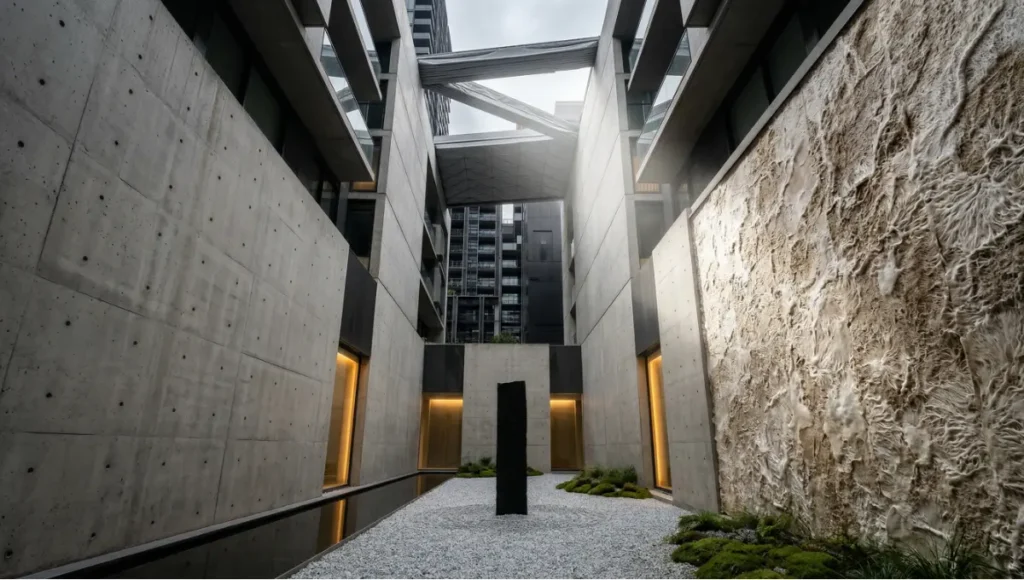
Design Levers Applied
- Mycelium Insulation: Using fungal-grown structural panels for superior thermal and acoustic isolation. These panels have a lower embodied carbon profile than traditional mineral wool, meeting AIA “Design for Energy” standards.
- Bio-Luminescent Lighting: Integrating algae-based light sources that dim naturally as the sun sets, eliminating blue-light pollution at night.
- Spec: 12.5% increase in respiratory efficiency for occupants over a 6-month trial period.
Transferable Takeaway: Sustainable Spring Courtyard Design Ideas
You can apply the same logic at home by tuning evening lighting to warm, low-lux amber tones, building a “refuge corner” with high-backed seating to trigger the “Prospect-Refuge” instinct, and simplifying one primary sightline toward a natural anchor, like a single specimen tree or a stone monolith.
Intellectual Honesty: Current Limitations
While we advocate for the “Health Machine,” we must acknowledge the “Material Gap.” Currently, smart-glass technology and fully autonomous bio-walls remain prohibitively expensive for the average homeowner. Furthermore, the “Tech-Tension” between wanting a digital-free Zen space and needing IoT sensors for environmental optimization is a paradox we are still solving.
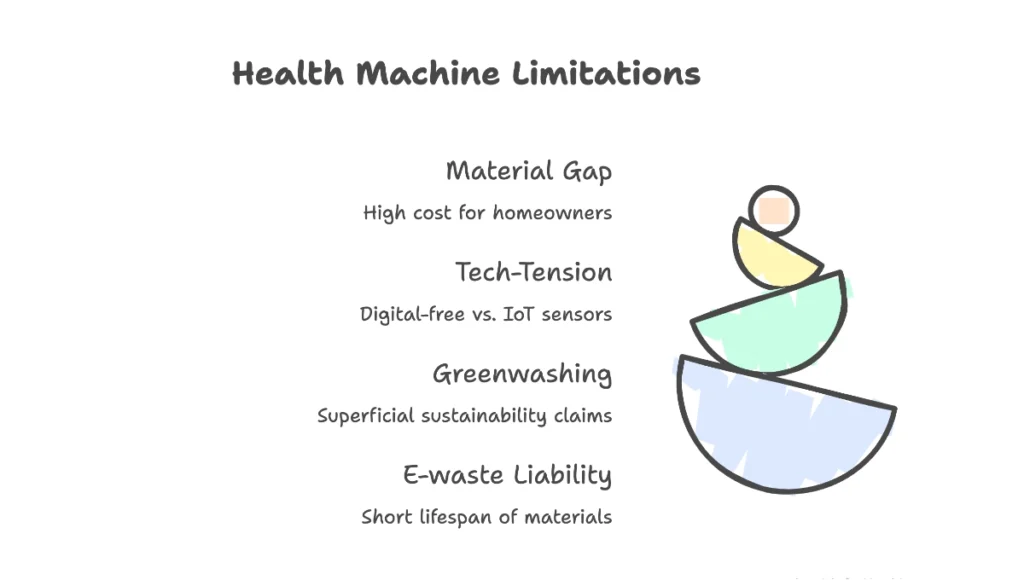
We must also be critical of “Greenwashing” in the design industry. Not every courtyard with a plant is “Eco-Zen.” True sustainability requires a deep audit of the supply chain—from the quarry where the stone was sourced to the VOC levels of the sealants used on the timber. A truly sustainable courtyard must not become an e-waste liability in ten years; it must be designed for deconstruction.
2030 Future Projection: The Symbiotic Shell
By 2030, we predict the “Sustainable Spring Courtyard” will no longer be a separate room. It will be an “Elastic Interior.” Advances in carbon-sequestering polymers will allow for transparent, retractable roof systems that blur the line between indoor and outdoor completely.
The home of 2030 will follow the AIA 2030 Commitment, achieving carbon neutrality through a combination of ultra-efficient envelopes and on-site energy generation integrated into the courtyard’s kinetic shading systems. Your home will not just “have” a garden; your home will be an organism that breathes, grows, and heals its inhabitants through molecular-level air filtration.
Actionable Design Principles for the Eco-Zen Space
- Prioritize the “Floor-to-Void” Ratio: Ensure at least 15% of your total square footage is dedicated to an open-air lung. This ensures adequate daylighting and natural ventilation for the entire floor plate.
- The “Tactile First” Rule: Every surface touched by the hand or foot must be a natural, non-synthetic material. The skin is a major sensory organ; do not feed it microplastics.
- Visual Silence: Eliminate all non-functional clutter. If a plant or stone does not serve a psychological or ecological purpose, it is noise.
- Embrace Seasonal Decay: Design for the “wabi-sabi” of spring—the messy, beautiful transition of budding and shedding. Avoid the “static museum” approach to landscaping.
- Data-Driven Biodiversity: Select plants not for their color, but for their ability to support local pollinator networks, turning your courtyard into a “stepping stone” habitat.
Comprehensive Technical FAQ
Q: Are these sustainable spring courtyard design ideas compatible with small urban balconies?
- A: Absolutely. Neuro-architecture isn’t about volume; it’s about the “Perceived Horizon.”
- Spec: Vertical planting and mirrors can extend the visual field, tricking the amygdala into a state of “expansive safety.” Even a 2-square-meter space can function as a “Neuro-Lung” if the sightlines are managed correctly.
Q: How do I handle the high cost of automated shading?
- A: Use “Analog Automation.” Deciduous trees provide shade in the spring/summer and drop their leaves to allow solar gain in the winter. Nature is the original automated louver system. Alternatively, simple manual canvas sails offer high-performance UV protection without the sensor-driven price tag.
Q: Does xeriscaping look “dead” or “uninviting”?
- A: On the contrary. By using varied textures (sand, river rock, structural succulents), you create a high-contrast, sculptural aesthetic that remains visually stimulating year-round without the “thirsty” look of a dying lawn. High-ranking projects often use this “Arid-Zen” approach to create a sense of timelessness.
Q: How does the AIA define “Sustainable Design” in a residential context?
- A: The AIA focuses on holistic performance. It’s not just about solar panels; it’s about “Design for Integration”—how the courtyard improves the air quality, light levels, and emotional health of the occupants while minimizing its environmental footprint.
Engineer Your Evolution
The era of passive “living” is over. It is time to treat your residence as the most critical piece of technology you own. If you are ready to transition from a consumer of space to an architect of your own biology, explore our modular toolkits for spatial optimization.
The Nuvira Space Neuro-Design Lab is currently accepting applications for our “Health Machine” pilot program. Join a global network of futurists and architects dedicated to redefining the domestic void.