

Table of Contents
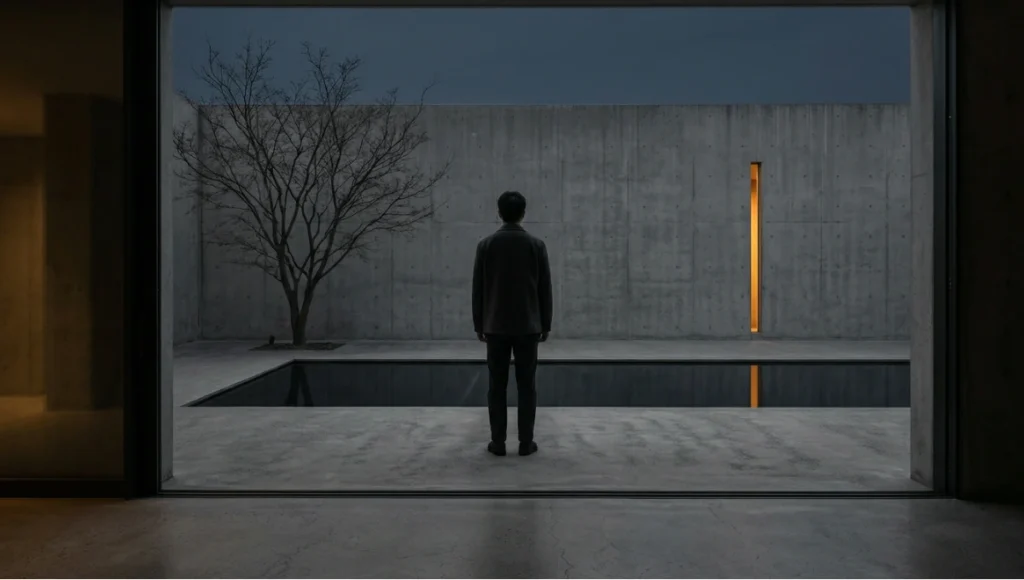
The global shift toward high-density urbanism has transformed the residential perimeter from a “leisure zone” into a critical cognitive refuge. We are witnessing a transition where minimalist garden architecture is no longer defined by what is missing, but by the precision of what remains. In an era of sensory overload, the outdoor environment must function as an extension of the internal nervous system—a calibrated interface designed to downregulate the sympathetic “fight or flight” response through spatial clarity and biological resonance.
Nuvira Perspective
At Nuvira Space, we view the home not as a static shelter, but as a “health machine” evolving in tandem with human-machine synthesis. We believe the next era of domestic life is defined by circadian synchronization and modular adaptability. Your garden is the primary intake valve for this system. By treating minimalist garden architecture as a programmable biophilic engine, we move beyond “decor” into the realm of physiological optimization. Our designs prioritize the evolution of the home into a responsive sanctuary where every line of sight and material threshold is engineered to harmonize the occupant’s biological clock with the fluid demands of a post-digital existence.
Technical Deep Dive: The Neuro-Architecture of the Void
To master minimalist garden architecture, one must understand that the human brain processes “emptiness” as a computational relief. In Neuro-Architecture, we look at how specific geometries trigger the release of acetylcholine, fostering a state of focused calm. For those new to this field, understanding neuroarchitecture basics is essential for grasping how physical surroundings alter neurochemistry. This aligns with the American Institute of Architects (AIA) initiatives on Design for Health, which emphasize that the built environment—inclusive of exterior transitional spaces—directly modulates the occupant’s endocrine system.
1. The Rule of Monomateriality and Haptic Continuity
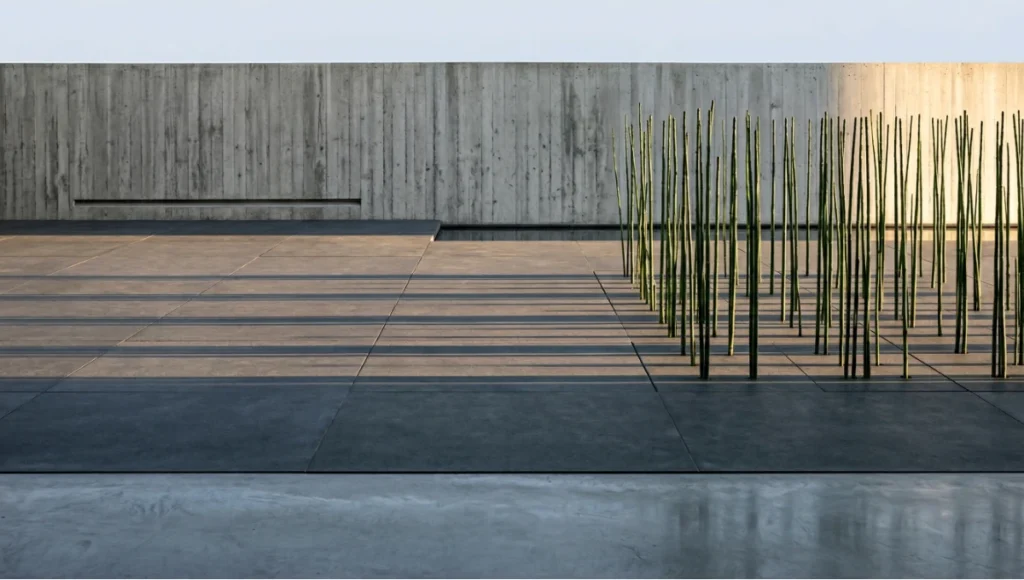
Traditional landscaping often creates “visual noise” through excessive variety. Minimalist architecture demands a singular material palette to reduce cognitive load. This is a disruptive departure from the “English Garden” standard of high-density textures.
- Technical Spec: Use a single grade of basalt, honed anthracite limestone, or oversized concrete pavers (min. 1200mm x 1200mm) to minimize grout lines.
- The Impact: When the eye doesn’t have to jump between textures, the brain enters a “flow state” more rapidly. Haptic continuity ensures that the sensory input from the feet to the brain remains predictable, lowering the metabolic cost of navigating the space.
2. Circadian Light Sculpting: The Architectural Clock
Your garden should be a clock. Minimalist design uses physical structures to track the sun’s movement, reinforcing your natural sleep-wake cycle. While we focus here on exterior structures, these principles should ideally integrate with interior circadian lighting systems to maintain a unified biological rhythm throughout the home. According to AIA research into evidence-based design, access to shifting light patterns is not just an aesthetic preference but a clinical necessity for mental health in dense urban environments.
- Technical Spec: Implement “Vertical Fins” or “Slotted Pergolas” oriented to the 15-degree solar arc. Use low-reflectance, matte finishes to prevent glare-induced cortisol spikes.
- The Impact: Shadow patterns moving across a neutral wall provide a rhythmic, non-distracting time-keeping mechanism for the subconscious. This “slow-motion” visual feedback loop anchors the individual in the present moment, a core requirement for neuro-architectural wellness.
3. Negative Space as a Functional Nutrient
In Singapore’s “City in a Nature” model, architects use “void decks” and sky terraces not as empty space, but as air-flow and psychological buffers. This macro-level thinking is explored further in our sponge cities explanation, where urban voids manage both water and human wellness. We treat negative space as a “nutrient” for the prefrontal cortex.
- Technical Spec: Maintain a strict 3:1 ratio of “Hardscape Void” to “Feature Object.” Every plant or sculpture must earn its place by serving as a focal anchor for deep focus.
- The Impact: This ratio prevents the “claustrophobic reflex” common in standard dense urban lots. It allows the eyes to achieve “infinite focus” (or distant viewing), which relaxes the ciliary muscles and signals safety to the amygdala.
4. Chromatic Restraint and Melatonin Integrity
The “rules” of minimalist garden architecture extend into the electromagnetic spectrum. We eliminate the multi-colored light pollution typical of modern “smart” homes in favor of spectral purity.
- Technical Spec: All exterior illumination must be recessed, shielded, and strictly limited to a color temperature between 1800K and 2700K.
- The Impact: By removing blue light (450-480nm) from the garden architecture, we protect the production of melatonin. The garden becomes a “buffer zone” that prepares the brain for sleep before the occupant even enters the bedroom.
5. Acoustic Masking through Linear Geometry
Minimalism is often criticized for being “quiet,” but we engineer it to be acoustically intentional. In cities like Rotterdam, where urban noise is a constant, garden architecture must act as a sound-canceling headphone for the soul.
- Technical Spec: Integration of “Linear Rills”—long, narrow water channels—with a controlled 2cm drop.
- The Impact: The steady, white-noise frequency of a linear rill is more effective at masking low-frequency urban rumble (traffic, HVAC systems) than a splashing ornamental fountain. It provides a constant auditory anchor.
6. The “Flush Threshold” and Motor Cortex Ease
The transition from the interior to the exterior is where most architectural designs fail. At Nuvira Space, we view the door-frame as a redundant boundary.
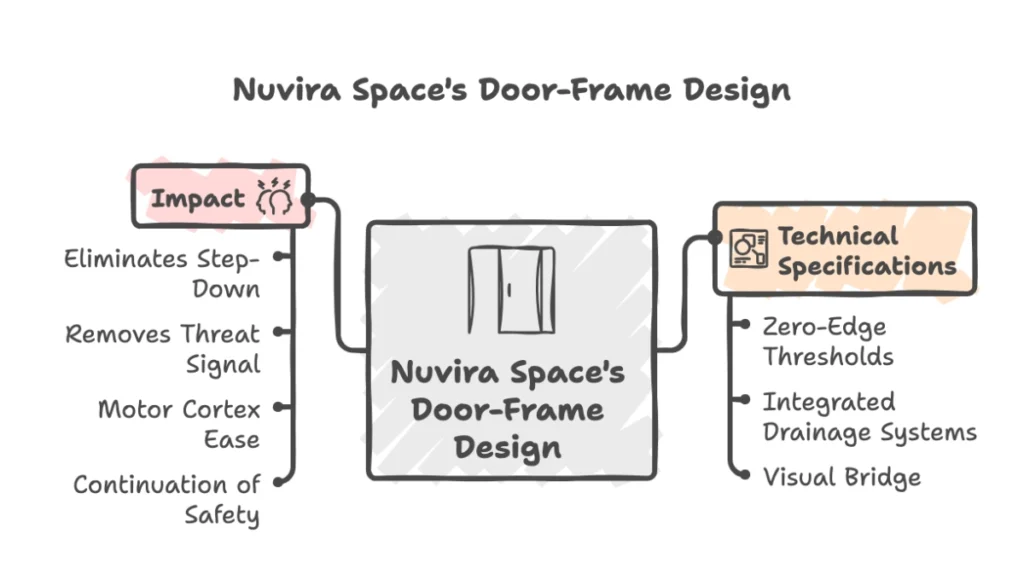
- Technical Spec: Zero-edge thresholds with integrated drainage systems. Indoor flooring materials must extend exactly 2 meters into the outdoor space to create a “Visual Bridge.”
- The Impact: Eliminating the “step-down” removes a subconscious threat signal (the fall reflex). When the motor cortex doesn’t have to adjust for height changes, the transition into the garden feels like a continuation of safety rather than an entry into “the elements.”
7. Structural Monoculture and Pattern Recognition
We replace decorative planting with architectural planting. The brain is hardwired for pattern recognition; complex, disorganized plant beds are processed as “entangled hazards” at a primitive level.
- Technical Spec: Repetitive grids (e.g., 5×5 or 10×10) of singular species like Equisetum hyemale or Carpinus betulus columns.
- The Impact: Predictable patterns allow the brain to “shortcut” the processing of the environment. This reclaimed energy is then redirected toward creative thought or recovery.
Comparative Analysis: Nuvira Logic vs. Industry Standard
| Feature | Industry Standard Garden | Nuvira Minimalist Architecture |
|---|---|---|
| Planting Philosophy | High-diversity “Cottage” style (High visual noise) | Structural Monoculture (Architectural rhythm) |
| Boundaries | Ornamental fencing (Disruptive sightlines) | Seamless Ha-Ha walls or Recessed Perimeters |
| Water Integration | Decorative fountains (Inconsistent sound) | Mirror Pools or Linear Rills (Acoustic masking) |
| Lighting | Static LED spotlights (Blue light pollution) | Dynamic Warmth (1800K – 2700K) Circadian dimming |
| Thresholds | Step-down/Raised plinths (Discontinuous) | Flush/Zero-edge (Cognitive continuity) |
| Sustainability | Annual high-water ornamentals | Xeriscaped architectural perennials |
Concept Project Spotlight: “NEURO-SYNC PERIMETER” by Nuvira Space
Project Overview
- Location: Copenhagen, Denmark
- Typology: Residential Biophilic Interface
- Vision: To create a garden that serves as a seasonal antidepressant through light-refractive architecture. This project builds upon principles advocated by the AIA’s Committee on the Environment (COTE), focusing on how building envelopes can mitigate seasonal affective disorder (SAD).
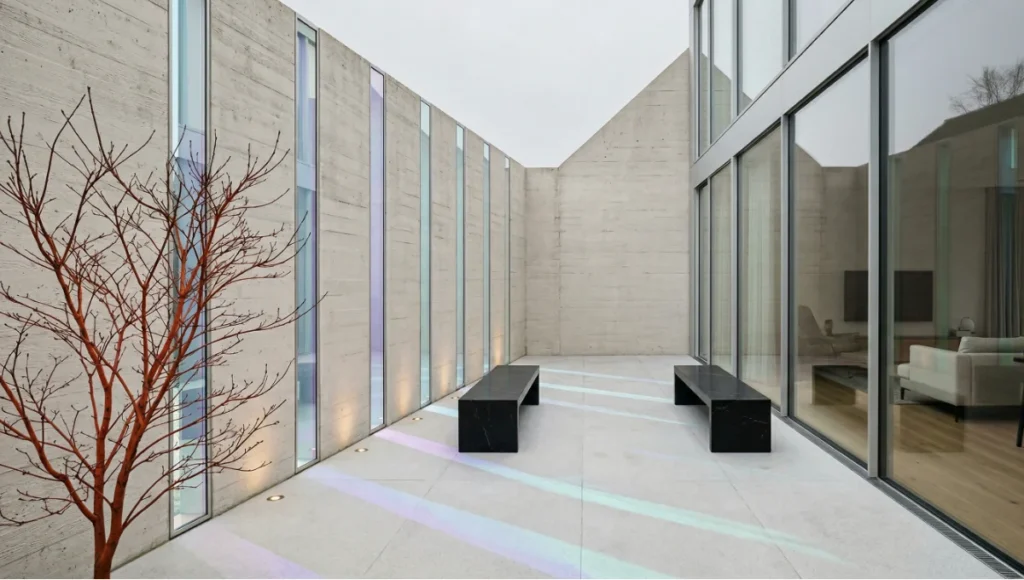
flush-threshold flooring, monolithic Nero Marquina thermal mass benches, single Acer palmatum specimen, and 1800K recessed ground lighting — biophilic neuro-architecture designed to counteract
Seasonal Affective Disorder through circadian light sculpting and chromatic restraint.
Design Levers Applied
- Refractive Glass Finishes: Using dichroic glass panels within garden walls to “catch” and multiply limited Nordic sunlight.
- Acoustic Isolation Geometry: 45-degree angled retaining walls designed to deflect urban decibel levels away from the central “Refuge Corner.”
- Thermal Mass Seating: Modular stone benches with integrated low-voltage radiant heating, allowing for outdoor grounding even in sub-zero temperatures.
Transferable Takeaway
You can apply the same logic at home today by tuning evening lighting to eliminate blue-spectrum spikes after sunset, building a refuge corner that physically blocks the view of your neighbor’s structure, and simplifying one primary sightline toward a natural anchor—like a single Acer palmatum or a monolithic stone—to give the prefrontal cortex a place to rest.
The AIA Framework: Design as a Public Health Tool
Our approach is grounded in the AIA Framework for Design Excellence, specifically the Design for Well-being pillar. The AIA argues that architects have a professional obligation to consider the physical and mental health impacts of every square meter they design. Minimalist garden architecture is the ultimate expression of this: it is the stripping away of the ego-driven ornament to reveal a space that serves the biological needs of the human animal. For deeper reading on these standards, professionals often refer to the AIA’s Blueprint for Better which showcases case studies on how architecture solves societal health challenges.
Intellectual Honesty: Current Limitations
While minimalist garden architecture offers profound neuro-benefits, we must acknowledge the “sterile trap.” Pure minimalism can sometimes lead to an absence of biodiversity if not carefully managed. The challenge for 2026 is integrating “hidden” ecological complexity—such as pollinator-friendly species that fit within a geometric grid—within a clean aesthetic. We also face limitations in smart-material costs; self-healing concrete and photo-luminescent pavers remain high-barrier technologies for the average homeowner.
2030 Future Projection: The Sentient Garden
By 2030, we predict the integration of “Neural-Link” environments. Your garden’s architecture will adjust in real-time to your biometric data. Feeling stressed? The mirror pool’s temperature and opacity shift. Need energy? The kinetic canopy opens to maximize Lux-intake. The garden will no longer be a place you look at, but a system you wear. We anticipate a new AIA certification level: “Neuro-Adaptive Design,” where the built environment must prove its ability to lower a resident’s resting heart rate.
Actionable Design Principles for Minimalist Garden Architecture
- Enforce Axial Symmetry: Align the garden’s center point with the main interior viewing portal (the “Primary Sightline”).
- Eliminate the Plinth: Ensure indoor and outdoor floor levels are flush to remove the “trip-hazard” signal in the brain’s motor cortex.
- Frame the Sky: Use high walls with a “negative cutout” to focus the eye upward, away from urban clutter.
- Material Sincerity: Never use “faux” materials. If it looks like stone, it must be cold to the touch like stone. The brain dislikes “sensory lies.”
- Subtractive Maintenance: Design spaces that require “removing” (pruning/cleaning) rather than “adding” (fertilizing/replacing).
Comprehensive Technical FAQ
Q: Does minimalism mean a lack of plants?
A: No. It means intentional planting.
- Standard: 15 different species in one bed.
- Minimalist: A repetitive grid of 40 Equisetum hyemale (Horsetail) for architectural verticality. We look for “architectural plants”—those with consistent, predictable shapes.
Q: How does this impact property value?
A: “Design Literacy” is rising globally. Buyers in cities like Rotterdam and Singapore are increasingly seeking “Wellness-Certified” spaces over ornamental ones. Minimalist gardens are viewed as low-maintenance, high-longevity assets.
Q: Is this sustainable?
A: Highly. By focusing on monomateriality (local stone) and architectural perennials, we reduce the carbon footprint associated with seasonal plant replacement and high-water-use ornamentals. This meets the AIA 2030 Commitment for carbon-neutral design.
Q: How do I handle drainage in a flush-threshold design?
A: Use a “slot drain” or “infinity edge” hidden beneath the primary material transition. It allows for a seamless visual flow while managing high-velocity rainfall.
Connect with Nuvira Space to Audit Your Spatial Psychology
The future of the home is not more “stuff,” but more clarity. If you are ready to transition your outdoor space from a source of labor into a source of life, it is time to apply the logic of neuro-architecture.