

Table of Contents
7 Ways Circadian Lighting Systems Transform Wellness: The Neuro-Architectural Manifesto
The modern human is an indoor species. We spend approximately 90% of our lives encased in drywall and glass, effectively living in a state of “biological exile” from the solar cycles that programmed our DNA for millennia. This detachment isn’t merely an aesthetic loss; it is a physiological crisis. When you inhabit a space with static, unchanging illumination, you are feeding your brain “junk light”—a flat, monochromatic signal that confuses your internal clock, degrades your sleep, and erodes your cognitive potential.
To reclaim your vitality, you must stop viewing your home as a collection of decor and start viewing it as a high-performance interface. The integration of circadian lighting systems is the first step in turning your dwelling into a precision tool for human optimization.
Nuvira Perspective: The Home as a Health Machine
At Nuvira Space, we reject the superficiality of traditional interior design. We operate at the intersection of neuro-architecture and human-machine synthesis. For us, the home is not a passive container for objects; it is an active “health machine”—a modular, adaptive environment that must synchronize with your biological imperatives.
We believe the future of domestic life lies in the seamless integration of technology and biology. By implementing advanced circadian synchronization, we aren’t just lighting a room; we are recalibrating your endocrine system, optimizing your neurochemistry, and ensuring that your built environment works in total harmony with your circadian rhythm. In this new era, “luxury” is defined not by the brand of your sofa, but by the precision of your home’s biological support systems.
Technical Deep Dive: The Mechanics of Light and Life
To understand how circadian lighting systems transform wellness, we must look beyond lumens and watts into the realm of spectral power distribution (SPD) and retinal biology.
1. Hormonal Orchestration: The Cortisol-Melatonin Pivot
The primary way circadian systems function is by managing the delicate dance between cortisol and melatonin. Your eyes contain specialized cells called intrinsically photosensitive Retinal Ganglion Cells (ipRGCs). These cells don’t “see” images for the visual cortex; they sense blue-rich light (roughly 480nm) to communicate directly with the Suprachiasmatic Nucleus (SCN)—your brain’s master clock.
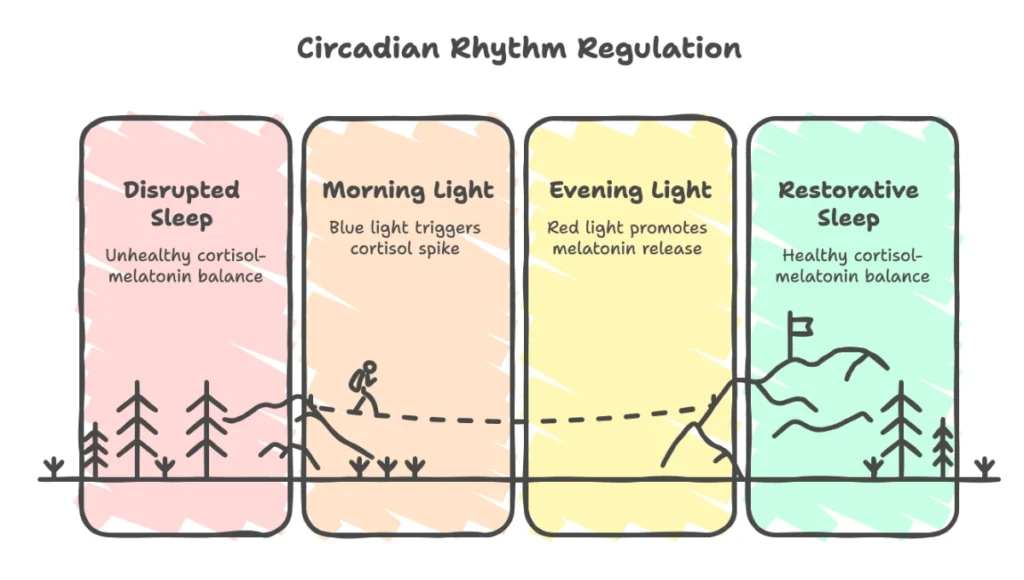
- The Morning Spike: By delivering high-intensity, blue-enriched light (approx. 5000K–6500K) in the early hours, these systems trigger a healthy cortisol awakening response. This sets the “timer” for your entire day.
- The Evening Fade: As the day progresses, the system shifts the spectrum toward the long-wavelength red end. By eliminating blue light after sunset, you prevent the suppression of melatonin, allowing for a natural transition into deep, restorative sleep.
2. Cognitive Throughput and Spectral Precision
Your brain’s ability to process information is directly tethered to the quality of light hitting your retina. Static “warm white” bulbs often used in traditional decor provide insufficient stimulation for peak mental performance during the day.
- Melanopic Lux: We measure light not just in standard lux, but in Melanopic Equivalent Daylight Illuminance (m-EDI). This determines how much the light is actually stimulating your internal clock.
- Focus States: Circadian systems use “tunable white” technology to provide high m-EDI during your deep-work windows, increasing alertness and reducing the cognitive load required to maintain focus.
3. Metabolic Stability and Peripheral Clocks
Emerging research in chronobiology suggests that light exposure influences your metabolic health. Every organ in your body has a “peripheral clock.” When your central master clock (the SCN) is out of sync with your peripheral clocks due to irregular light (e.g., bright light at 11 PM), your insulin sensitivity and hunger hormones (ghrelin and leptin) become dysregulated.
- Technical Spec: A properly tuned system maintains a 24-hour cycle that mimics the solar arc, providing the stable “Zeitgeber” (time-giver) signal your body needs for metabolic homeostasis.
4. Emotional Regulation via the Amygdala
Light does not just affect what you think; it affects how you feel. The neural pathways from your ipRGCs lead directly to the limbic system—the emotional center of the brain.
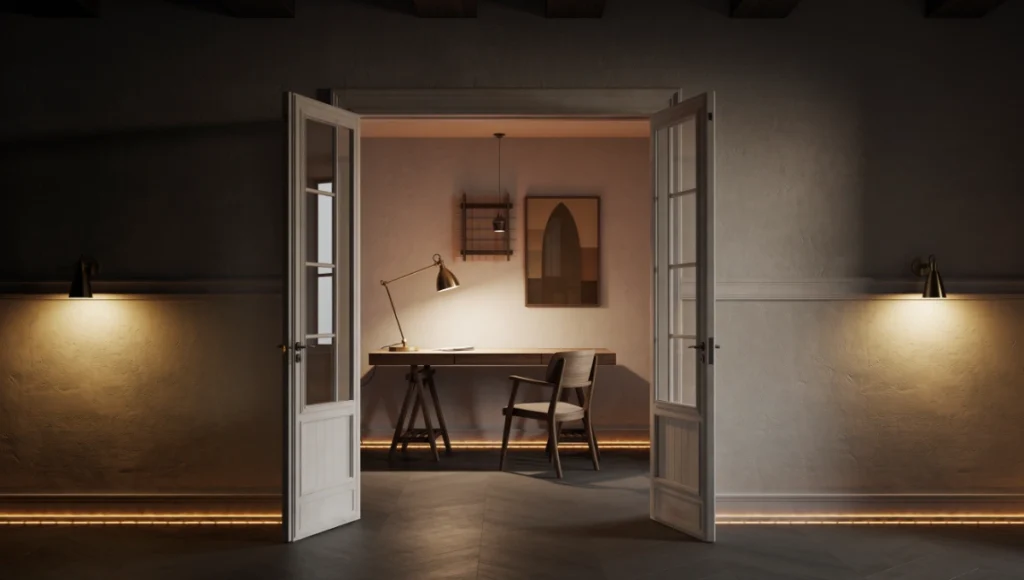
- Vibrant Mornings: Bright, cool light has been shown to reduce symptoms of Seasonal Affective Disorder (SAD) and general lethargy.
- Amber Evenings: Low-intensity, warm light (1800K–2700K) reduces amygdala reactivity, lowering anxiety levels and preparing the nervous system for “Rest and Digest” mode.
5. Visual Acuity and the Flicker Factor
Most standard LED bulbs flicker at a frequency invisible to the naked eye but detectable by the brain, leading to eye strain and micro-stress. Professional-grade circadian systems utilize high-frequency PWM (Pulse Width Modulation) or constant-current dimming to ensure a rock-steady light source.
- CRI and R9 Values: We prioritize a Color Rendering Index (CRI) of $>95$, specifically focusing on the R9 (saturated red) value. This ensures that skin tones and natural materials in your space look vibrant and “alive.”
6. Immune System Resilience
Sleep is the primary engine of immune function. By reinforcing a consistent circadian rhythm, these lighting systems increase the duration of Stage 3 (Deep) and REM sleep. During these phases, your body produces cytokines and T-cells. A space that disrupts your sleep is, quite literally, making you more susceptible to illness.
7. Biophilic Response and the Copenhagen Case Study
In cities like Copenhagen, where winter daylight can be as scarce as seven hours a day, the physiological impact of light is a matter of public health. Architects in Copenhagen have pioneered the use of “Active House” standards, where artificial lighting isn’t a replacement for the sun, but a biological supplement.
- The Macro Context: By mimicking the subtle shifts of northern light—which is often soft, diffused, and highly dynamic—circadian systems in dense urban environments prevent the “biological winter” that residents often face, maintaining high levels of serotonin even when the sky is gray.
Comparative Analysis: Nuvira Circadian vs. Industry Standard
To understand the disruption, we must compare the “Health Machine” approach with traditional “Smart Lighting.”
| Feature | Industry Standard “Smart” Lighting | Nuvira Circadian Systems |
|---|---|---|
| Control Logic | Manual App/Voice dimming | Fully autonomous astronomical clock |
| Spectral Quality | RGB color mixing (Low CRI) | Full-spectrum tunable white (CRI 98+) |
| Biological Impact | Visual comfort only | Melanopic-weighted for hormone regulation |
| Dimming Tech | Potential flicker at low levels | Zero-flicker deep dimming (0.1%) |
| Integration | Standalone “bulbs” | Architecturally integrated luminaires |
The Industry Standard: Traditional smart bulbs allow you to turn lights “purple” or “warm,” but they often lack the spectral depth to actually trigger biological responses. They are toys, not tools. The Nuvira Standard: Our systems are invisible. They operate on a sub-perceptual level, shifting the environment’s biology without requiring the user to “manage” the light. It is an automated health intervention.
Concept Project Spotlight: Speculative / Internal Concept Study “The Heliospheric Loft” by Nuvira Space
Project Overview
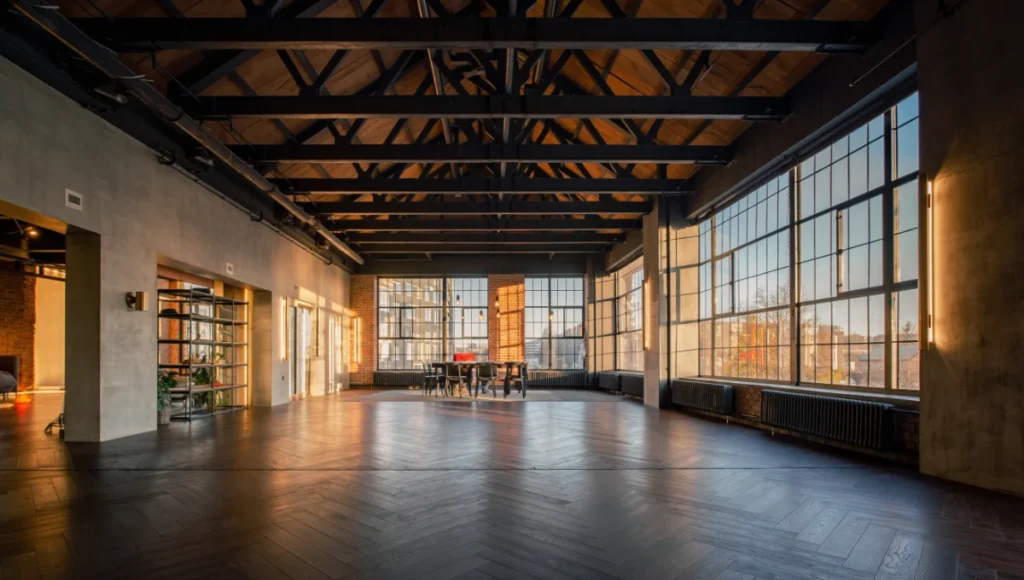
- Location: Rotterdam, Netherlands
- Typology: Adaptive Re-use (Post-Industrial Warehouse)
- Vision: Converting a 400sqm concrete shell into a “Solar-Linked Sanctuary” for a high-performance neuro-scientist.
Design Levers Applied
- Dynamic Sky Ceilings: We replaced traditional skylights with high-definition LED arrays that replicate the exact Rayleigh scattering of the atmosphere, providing a “virtual sky” that moves in real-time with the local sun position.
- Circadian Layering: * Ambient: Indirect “cove” lighting that washes walls with cool light (6500K) in the morning to maximize vertical retinal exposure.
- Task: Precision-focused 3000K lighting for work surfaces to maintain contrast without disrupting the wider room’s cycle.
- Signal: Low-level “amber” floor-washing lights (1800K) for nighttime navigation that emit zero wavelengths below 500nm.
- Material Interaction: Use of matte-finish lime wash and raw oak to diffuse light evenly, preventing high-glare “hot spots” that trigger the brain’s “glare-stress” response.
Transferable Takeaway
You can apply the same logic at home by tuning evening lighting to warm ambers, building a refuge corner with soft, diffused light, and simplifying one primary sightline toward a natural anchor (like a window or a large plant) that is illuminated with high-CRI spotlights to simulate a sun-drenched grove.
Intellectual Honesty: Current Limitations
While circadian lighting systems represent a massive leap forward, we must acknowledge their current constraints:
- The “Blue Light” Paradox: Not all blue light is bad. In fact, “blue-blocking” everything all day can be just as damaging as over-exposure at night. The body needs high-intensity blue light in the morning to function.
- The Infrastructure Cost: True circadian lighting requires sophisticated drivers and wired control systems (like DALI or DMX). It is a significant investment compared to consumer-grade “smart” plugs.
- Screen Dominance: Technology cannot fix behavior. If you have a $50k lighting system but spend your final hour of the day staring at a high-brightness smartphone, the “junk light” from the screen will override the biological signals from the room.
2030 Future Projection: The Bio-Reactive Interior
By 2030, we predict that lighting will no longer come from “fixtures” or “bulbs.” Instead, we will see the rise of Bio-Reactive Surfaces.
- OLED Walls: Imagine walls coated in OLED “paint” that can shift its entire surface temperature based on your wearable device’s real-time cortisol data.
- Genetic Personalization: Lighting schedules will be determined not by the sun, but by your specific “chronotype” (determined via DNA testing). The home will essentially become an externalized version of your own nervous system, automatically adjusting the environment to mitigate stress before you even feel it.
Actionable Design Principles for the Built Environment
- Prioritize Vertical Illuminance: Your ipRGCs are most sensitive to light coming from the “sky” (the upper half of your visual field). Ensure your morning light hits the walls and ceiling, not just the floor.
- The Sunset Cut-off: Program your system to begin a 90-minute “fade to amber” starting two hours before your desired sleep time.
- Eliminate Blue Leakage: Check for “phantom” blue lights from appliances or chargers in the bedroom. Even a tiny blue LED can disrupt the brain’s perception of darkness.
- Embrace Darkness: A key part of circadian wellness is the absence of light. Your “Health Machine” must be capable of total blackout to facilitate cellular repair and autophagy. For deeper integration of natural patterns with circadian lighting, explore our guide to Biophilic Interior Design: 7 Iconic Ways to Reduce Stress.
Comprehensive Technical FAQ
Q: What is the difference between “Tunable White” and “Circadian Lighting”?
A: Tunable white refers to the capability of a light to change its color temperature. Circadian lighting is the application of that technology based on a biological schedule.
- Tunable: A feature of the hardware.
- Circadian: A software-driven biological protocol.
Q: Does CRI (Color Rendering Index) actually matter for health?
A: Yes. Low CRI lighting (typical of cheap LEDs) creates a “spectral gap” that can cause subtle visual strain. When the brain can’t clearly distinguish colors and textures, it operates at a higher state of baseline alertness/stress. High CRI ($>95$) ensures the brain perceives the environment as “safe” and “natural.”
Q: How many lux do I need in the morning for a circadian effect?
A: For effective suppression of melatonin and a strong cortisol spike, aim for:
- At the eye level: At least 250 melanopic lux (m-EDI).
- Duration: 20–30 minutes of exposure immediately upon waking.
Q: Can I use “smart bulbs” to create a circadian system?
A: Only if the bulbs offer a “tunable white” range (1800K to 6500K) and can be automated via an astronomical clock. However, most consumer bulbs lack the spectral density and the “deep dimming” capabilities required for true night-mode.
Q: Is red light the same as circadian light?
A: Red light is used at night because it has the least impact on melatonin suppression. However, during the day, red light alone is insufficient; you need the full spectrum, specifically the blue-cyan peaks, to stay “awake” biologically.
Invest in Your Biological Infrastructure
The era of “decor” is over. It is time to treat your living space as the critical infrastructure for your health that it truly is. By integrating circadian lighting systems, you are not just upgrading your home; you are upgrading your human potential.
Would you like our team of Neuro-Architects to review your current floor plan and develop a custom spectral map for your biological optimization? Contact Nuvira Space today to begin the evolution of your “Health Machine.”
4 thoughts on “7 Ways Circadian Lighting Systems Transform Wellness”