

Table of Contents
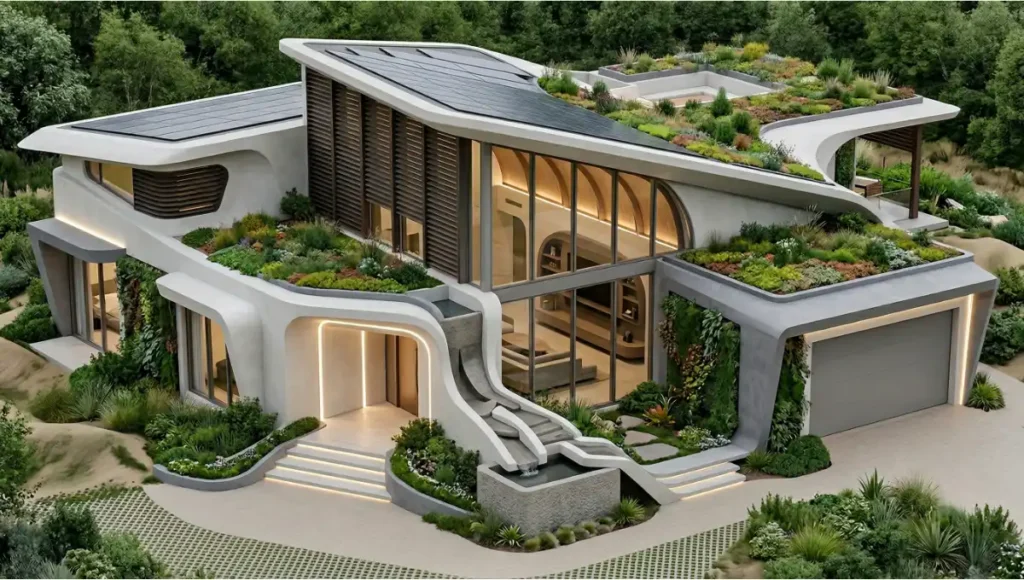
A well-designed home does not need excess square footage to feel generous. It needs proportion, intention, and intelligent spatial sequencing. The Green House Plan 2026 delivers exactly that within 1,373 FT² of heated living space—organized, efficient, and architecturally expressive.
You are not looking at a concept overloaded with trends. You are looking at a refined 1-story residence with 3 bedrooms, 2 bathrooms, and a 2-car front-entry attached garage—planned with clarity and discipline. Its 40′ 0″ width and 59′ 0″ depth position it comfortably on a narrow lot while still presenting a confident street presence.
This is compact design done correctly.
Architectural Footprint That Works on Real Lots
At 40′ 0″ wide and 59′ 0″ deep, the plan is suited for narrow lot conditions without sacrificing livability. The geometry is rectangular and efficient, reducing construction complexity and maximizing interior planning logic.
Because the garage is front-entry and attached, the footprint remains consolidated rather than fragmented. You gain:
- Clear structural spans
- Reduced circulation waste
- Strong curb symmetry
- Cost-efficient build sequencing
The total heated living area of 1,373 FT² pairs with 445 FT² of unheated garage space, giving you practical storage and vehicle accommodation without inflating conditioned square footage.
The building height of 21′ 3″ keeps the structure visually balanced and neighborhood-friendly, while still allowing interior vertical drama through vaulted spaces.
Structural Intelligence: Built for Performance
This plan is framed with 2×6 exterior wall construction, a meaningful upgrade over thinner framing systems. For you, this translates into:
- Improved thermal insulation capacity
- Stronger wall assembly
- Better acoustic control
- Long-term durability
The roof uses truss framing with a 6/12 primary pitch, creating both structural efficiency and pleasing exterior proportions. The pitch is steep enough for drainage and attic ventilation yet moderate enough to control construction cost.
These structural decisions are not decorative—they are performance-driven.
A Defined Arrival: Covered Front Porch + Vaulted Foyer
Your daily experience begins before you open the door.
The covered front porch establishes architectural depth and shadow lines across the façade. It protects the entry from rain and sun while creating a transitional outdoor threshold. In practical terms, this means:
- Packages remain protected
- Guests are sheltered
- The façade gains architectural layering
Step inside and the vaulted foyer immediately changes your perception of scale. While the main floor ceiling height is 9′ 0″, the vaulted entry volume expands upward, creating an intentional moment of vertical release.
You feel height without increasing the entire construction cost.
This is spatial strategy at work.
The Open Floor Plan: Efficiency Without Chaos
The home is organized around an open floor plan anchored by a Great Room. Because the house is 1 story, circulation remains intuitive and barrier-free.
The open configuration supports:
- Visual continuity from kitchen to living
- Flexible furniture arrangement
- Daylight flow from front to rear
The vaulted Great Room/Living area reinforces this openness. The upward slope of the ceiling increases perceived volume without increasing footprint. You benefit from:
- Improved air circulation
- Stronger architectural character
- Enhanced natural light reflection
The fireplace becomes a central anchor, grounding the verticality with warmth and material contrast.
The Kitchen: Functional Core of the Home
Within 1,373 FT², every square foot must work. The kitchen proves that efficiency and generosity can coexist.
Features Integrated Into Daily Life
- Kitchen Island
- Nook / Breakfast Area
- Pantry
- Walk-in Pantry
The kitchen island does more than provide prep space. It defines circulation pathways and creates an informal gathering point. You can cook while maintaining visual connection with the Great Room.
The nook/breakfast area softens the plan. Instead of formal dining isolation, you have a casual, light-filled zone that supports daily meals.
The inclusion of both a pantry and a walk-in pantry signals thoughtful storage planning. In a compact home, concealed storage is critical. You gain:
- Reduced countertop clutter
- Long-term organization
- Bulk storage capacity
This prevents your open floor plan from feeling visually chaotic.
Vaulted Great Room: Why Volume Matters
In a 1-story home with 9′ 0″ ceilings, vaulting key zones transforms perception.
The vaulted Great Room accomplishes several things:
- Creates a focal ceiling plane
- Allows higher window placement
- Enhances natural light penetration
- Improves spatial drama without increasing square footage
Because the total building height is 21′ 3″, the vault remains proportionate to the overall form. It does not feel exaggerated or structurally inefficient.
When you sit in this room, the volume feels deliberate—not accidental.
Library / Media Room: Flexibility in 1,373 FT²
A Library/Media Room inside a 1,373 FT² footprint is a rare inclusion. This space allows you to define your lifestyle rather than forcing the house to define it.
You can use it as:
- A focused home office
- A media lounge
- A reading library
- A quiet retreat
Because the plan includes 3 bedrooms, you are not forced to convert sleeping space into work space. That separation improves long-term livability.
Primary Bedroom on the Main Floor: Smart Living
The Primary Bedroom Main Floor configuration enhances accessibility and aging-in-place potential. With the entire home on 1 story, daily movement remains efficient and stair-free.
The primary suite includes:
- Walk-in Closet
- Double Vanity Sink
The double vanity sink in the primary bath improves morning flow and reduces congestion. In compact homes, shared bathroom inefficiency can quickly become frustrating. This layout avoids that.
The walk-in closet is scaled for organization, allowing clothing and seasonal storage to remain contained rather than spilling into bedroom space.
Family-Style Bedroom Planning
The additional 2 bedrooms support family-style living. With 3 bedrooms total, you gain:
- Room for children
- Guest accommodation
- Flexibility for hobby or workspace
The 2 bathrooms balance privacy and functionality. You avoid overbuilding plumbing systems while maintaining comfort.
This is thoughtful resource allocation.
Laundry on the 1st Floor: Practical Placement
The Laundry 1st Fl placement ensures all primary living functions occur on one level. You eliminate stair transport for laundry loads and maintain operational efficiency.
In compact homes, functional adjacencies matter more than ever. Laundry proximity to bedrooms improves workflow and reduces clutter migration.
Garage: 445 FT² of Unheated Utility
The 2-car attached garage provides 445 FT² of unheated living space. This is not an afterthought. It represents:
- Secure vehicle storage
- Tool organization
- Seasonal equipment storage
- Potential workshop zone
Because it is front-entry, driveway planning remains straightforward. The integration into the main volume maintains architectural cohesion.
Outdoor Living: Covered Front and Rear Porches
The plan includes both a covered front porch and a covered rear porch, along with clearly defined front porch and rear porch zones.
This dual outdoor system accomplishes:
- Social engagement at the street
- Private retreat at the rear
- Shade control
- Transitional living areas
On a view lot, the rear porch becomes a visual extension of the Great Room. On a narrow lot, it expands perceived depth.
Outdoor space is not decorative—it is spatial compensation.
Suited for Narrow Lot and View Lot
Being suited for narrow lot means the 40′ 0″ width was carefully considered. The façade remains balanced without sprawling laterally.
Being suited for view lot means rear glazing and porch orientation support outward visual extension.
These dual conditions give you flexibility when selecting land.
Open Floor Plan and Spatial Flow
The plan’s organization revolves around clarity:
- Entry → Foyer → Great Room
- Kitchen integrated with living
- Bedrooms zoned for privacy
- Garage access positioned logically
There is no wasted corridor excess. Circulation is purposeful.
In 1,373 FT², that discipline matters.
Ceiling Strategy: 9′ 0″ + Vaults
The base 9′ 0″ main floor ceiling ensures comfort and proportional balance. Vaulted areas create contrast rather than monotony.
Uniform tall ceilings can increase cost without improving spatial hierarchy. This plan uses height selectively, increasing impact while controlling budget.
Roof Pitch and Exterior Identity
The 6/12 roof pitch provides:
- Efficient water shedding
- Attic ventilation space
- Balanced exterior silhouette
Combined with truss roof framing, the construction process becomes streamlined and predictable.
The result is a clean, modern-green expression—functional rather than ornamental.
Fireplace as Emotional Anchor
In compact open plans, defining zones without walls requires strong architectural elements. The fireplace anchors the Great Room visually and emotionally.
It provides:
- A focal point
- Seasonal warmth
- Material layering opportunity
It also reinforces the family-style character of the home.
Single Dwelling Simplicity
The plan is designated as a Single Dwelling with None Bonus Access, reinforcing its clarity. There are no unnecessary bonus rooms or unfinished upper spaces complicating construction.
What you see is what you build.
That predictability matters in 2026 construction markets.
Why 1,373 FT² Feels Larger
This house feels larger than 1,373 FT² because of:
- Vaulted Great Room
- Open plan connectivity
- Rear porch extension
- Intelligent storage planning
- Clear structural spans
Square footage does not define experience. Volume, proportion, and light do.
Sustainable Thinking in Green House Plan 2026
While modest in scale, the design supports green principles through:
- 2×6 framing for improved insulation
- Controlled building envelope
- Efficient roof geometry
- Compact footprint reducing energy demand
Smaller heated space equals lower operational energy load.
That is sustainability through discipline—not gimmicks.
Everyday Living Experience
Picture your day:
- You enter through the covered front porch.
- Light filters through the vaulted foyer.
- The Great Room opens with volume and warmth.
- The kitchen island becomes a daily hub.
- Laundry is accessible and efficient.
- Bedrooms remain private yet connected.
- The rear porch extends your evening outdoors.
The plan supports rhythm.
Final Perspective
The 1 Innovative Green House Plan 2026 Design demonstrates how intelligent architecture transforms modest square footage into meaningful space.
With:
- 1,373 FT² heated living
- 3 bedrooms
- 2 bathrooms
- 2-car attached garage (445 FT²)
- 40′ 0″ width
- 59′ 0″ depth
- 21′ 3″ height
- 9′ 0″ ceilings with vaults
- 2×6 framing
- 6/12 roof pitch
You are investing in precision rather than excess.
If you are evaluating your next home build, ask yourself: do you want more square footage—or better architecture?
This plan invites you to choose better.
If the download link does not function properly, subscribe to Nuvira Space and we will send the full blueprint file directly to your inbox.